Published in Resume Mistakes
Resume Mistakes to Avoid: Entry-Level Guide
Discover the critical resume mistakes costing entry-level professionals job interviews and learn how to fix them.
PE
By Placed Editorial
11 min read
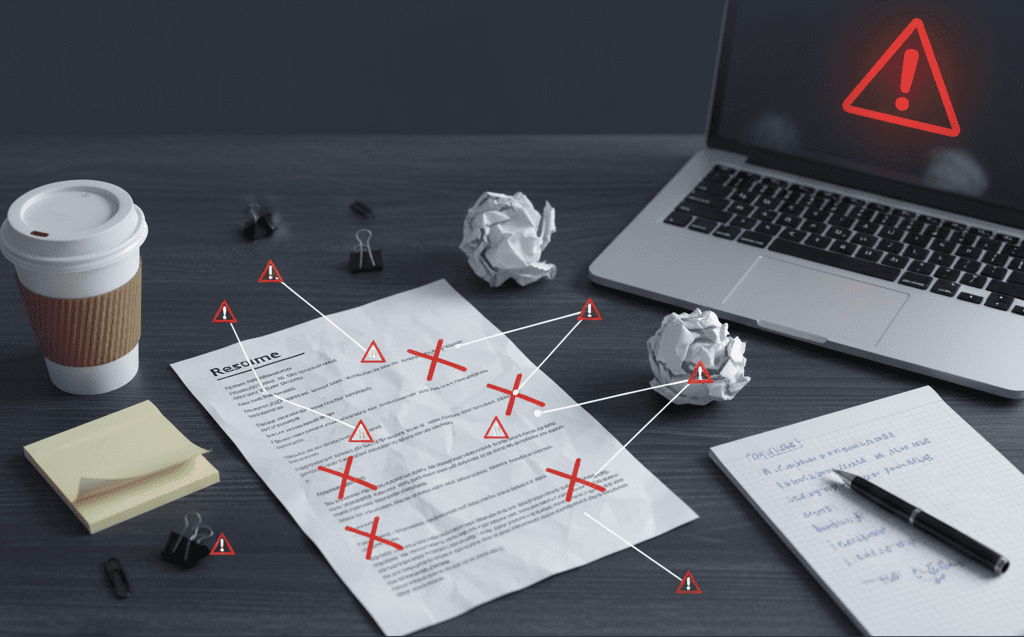
Landing your first professional role or making a significant career move as an entry-level professional often hinges on one crucial document: your resume. However, many job seekers inadvertently sabotage their chances by making common resume mistakes to avoid that prevent them from ever getting past the initial screening. Understanding these pitfalls from a recruiter's perspective and knowing how to rectify them is the key to unlocking interview opportunities.
Why Your Resume Isn't Getting Noticed (The Recruiter's View)
Your resume might not be getting noticed because it fails to clearly communicate your value, lacks specific achievements, or isn't optimized for Applicant Tracking Systems (ATS). Recruiters quickly scan for relevant keywords, quantifiable results, and a clean, professional format. Common pitfalls include generic statements, poor readability, and not tailoring your application to the specific job.
From a recruiter's standpoint, your resume is a marketing document designed to quickly answer one question: "Can this person do the job?" Most recruiters spend only seconds on a first pass of a resume, looking for immediate alignment with the job description. If your resume doesn't grab their attention with relevant skills and experiences right away, it's likely to be overlooked.
The primary purpose of a resume is to secure an interview. It's not a complete autobiography. Hiring managers are looking for evidence that you possess the skills and potential to solve their problems, not just a list of every task you've ever performed. The cost of a 'bad' resume isn't just a single rejection; it's a cascade of missed opportunities and prolonged job searches.
ATS Blunders: How to Avoid Being Filtered Out

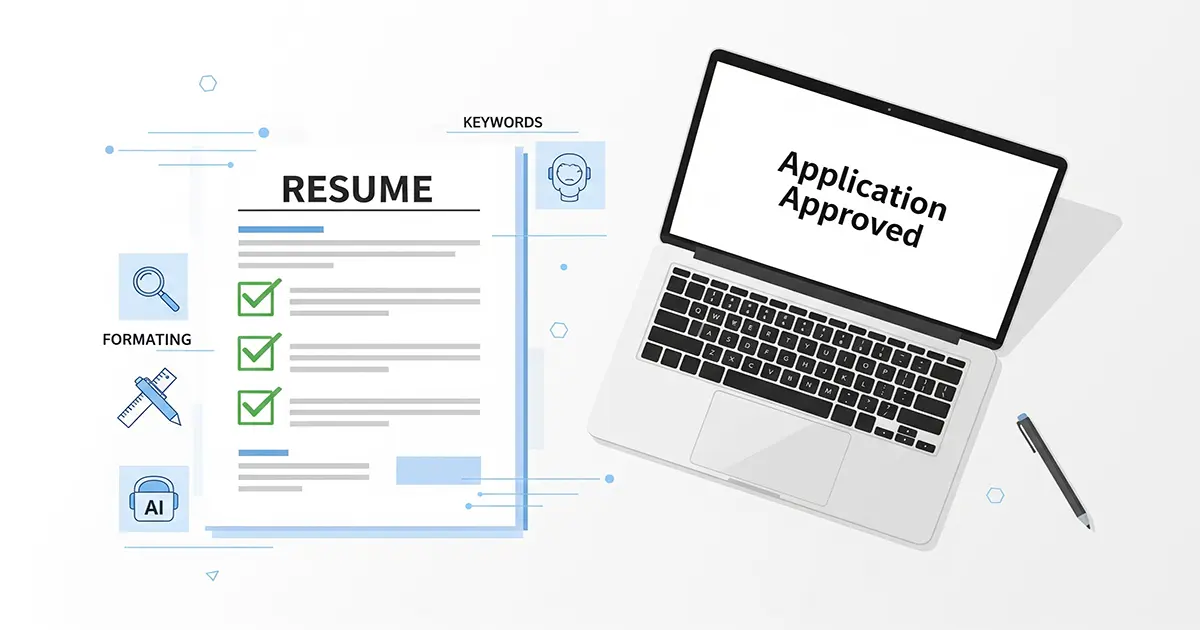
Applicant Tracking Systems (ATS) are software programs that scan resumes for keywords and formatting, often filtering out candidates before a human ever sees their application. Avoiding ATS blunders means using relevant keywords from the job description, choosing standard resume formats, and steering clear of graphics or complex layouts that can confuse the system.
Understanding what ATS is and why it matters is fundamental in today's job market. A significant percentage of resumes are rejected by ATS before reaching a human, meaning even highly qualified candidates can be overlooked if their resume isn't optimized. These systems parse your resume for specific terms and match them against the job description, effectively acting as the first gatekeeper.
Common ATS-Unfriendly Formatting Mistakes
Many design choices that look visually appealing can actually hinder ATS. Complex layouts, fancy fonts, graphics, text boxes, and even headers/footers can confuse the system, leading to crucial information being misread or omitted. Stick to clean, simple designs that prioritize content clarity over aesthetic complexity.
The importance of keyword matching cannot be overstated. Scrutinize the job description for key skills, responsibilities, and qualifications. Integrate these exact keywords naturally throughout your resume, especially in your professional summary, skills section, and work experience bullet points. Don't just list them; show how you've applied them.
To effectively check your resume's ATS compatibility and ensure you're not making these critical resume mistakes to avoid, consider using Placed's AI Resume Review tool. It scans your resume against job descriptions, highlights missing keywords, and identifies formatting issues that could trip up ATS, giving you actionable feedback.
The Content Catastrophes: Vague Language and Missing Impact
Content catastrophes on a resume include using vague language, listing responsibilities without achievements, and failing to quantify your impact. Hiring managers want to see what you achieved, not just what you did. Replace generic phrases with strong action verbs and concrete, measurable results that demonstrate your value.
The phrase "responsible for" is a red flag on a resume because it describes a duty, not an accomplishment. Recruiters want to know the outcome of your actions. Instead of simply stating what you were responsible for, explain what you achieved in that role, the problems you solved, or the improvements you made.
Vague vs. Impactful Statements
| Vague Statement (Before) | Impactful Statement (After) |
|---|---|
| Responsible for managing social media accounts. | Increased social media engagement by 25% across three platforms, reaching 5,000 new followers in six months. |
| Assisted customers with product inquiries. | Resolved over 50 customer inquiries daily, improving customer satisfaction scores by 15% through efficient problem-solving. |
| Helped organize events for student club. | Coordinated logistics for 5+ university events, managing budgets up to $1,000 and attracting over 200 attendees per event. |
| Learned new software programs. | Mastered Adobe Creative Suite (Photoshop, Illustrator, InDesign) to design marketing collateral, reducing external design costs by 10%. |
To quantify achievements, even with limited experience, focus on results, numbers, and impact. Did you save time? Reduce costs? Improve a process? Increase efficiency? Even qualitative achievements can often be framed quantitatively. For example, instead of "improved customer service," try "improved customer service by implementing a new feedback system that reduced complaint resolution time by 20%."
🧠 Expert Insight: "Hiring managers aren't just looking for skills; they're looking for proof you've applied those skills to deliver results. Quantify everything you can, even if it's an estimate, to show your tangible impact."
The STAR method (Situation, Task, Action, Result) is an excellent framework for crafting powerful bullet points. Describe the Situation, your specific Task, the Action you took, and the positive Result. This method helps transform generic duties into compelling stories of achievement.
Formatting Faux Pas: Readability and Professionalism
Formatting faux pas can make your resume difficult to read, unprofessional, and frustrating for recruiters. Mistakes include inconsistent fonts, cluttered layouts, excessive use of color, or incorrect spacing. A clean, consistent, and easy-to-scan layout ensures your key information is quickly absorbed and reflects your attention to detail.
For entry-level professionals, an optimal resume length is typically one page. Recruiters expect conciseness. If you have internships, volunteer work, or strong academic projects, prioritize the most relevant and impactful experiences. Only extend to a second page if absolutely necessary and filled with valuable content, but for most entry-level roles, one page is sufficient.
✅ Best Practices for Resume Formatting
- Font Choices and Sizing: Stick to professional, readable fonts like Arial, Calibri, or Georgia. Use 10-12pt for body text and 14-16pt for headings to create visual hierarchy.
- Consistent Spacing and Margins: Maintain 0.5-1 inch margins on all sides. Ensure consistent line spacing and bullet point indentation throughout the document for a clean look.
- Clear Section Headers: Use bold and slightly larger font for section headers (e.g., "Work Experience," "Education," "Skills") to guide the reader's eye.
- Save as PDF: Always save and submit your resume as a PDF file. This preserves your formatting across different systems and devices, preventing layout distortions.
When you're unsure about formatting or want to ensure your resume looks professional and avoids common resume mistakes to avoid, leveraging a reliable resume builder like Placed's can be incredibly helpful. These tools offer pre-designed templates that are both aesthetically pleasing and ATS-friendly, taking the guesswork out of formatting.
Personal Information Pitfalls: What to Include (and Exclude)
Personal information pitfalls involve including irrelevant or potentially discriminatory details on your resume, such as marital status, age, or a photo (unless specifically requested). Focus solely on professional contact information, a LinkedIn profile link, and a concise professional summary that highlights your career goals and relevant skills.
Your resume should be a professional document focused on your qualifications for the job. Essential contact information includes your full name, phone number, professional email address, and a link to your LinkedIn profile. Ensure your LinkedIn profile is up-to-date and professional, as recruiters will almost certainly check it.
Pros and Cons of Including Certain Personal Information
- Name, Phone, Email, LinkedIn URL: ✅ Pro: Essential for contact and professional networking. ❌ Con: None, if professional.
- Physical Address: ✅ Pro: Can be useful for local roles. ❌ Con: Can lead to unconscious bias or geographic filtering; often unnecessary. Consider just city/state.
- Photo: ✅ Pro: Can personalize. ❌ Con: Almost always a mistake unless in specific creative industries or requested; invites bias.
- Age, Date of Birth, Marital Status, Religion, Political Affiliation: ✅ Pro: None. ❌ Con: Invites discrimination, irrelevant to job performance. Never include.
- Hobbies/Interests: ✅ Pro: Can show personality for culture fit in some cases. ❌ Con: Often irrelevant, takes up valuable space, or can be misinterpreted. Only include if directly relevant to the role or company culture.
One critical detail to fix is an unprofessional email address. Ditch "partyanimal123@email.com" for something like "firstname.lastname@email.com." An unprofessional email address can instantly undermine your credibility and make a poor first impression, signaling a lack of seriousness about your job search.
Proofreading Perfection: The Non-Negotiable Step
Proofreading perfection is a non-negotiable step because even minor typos or grammatical errors can signal a lack of attention to detail and professionalism. These mistakes can instantly undermine your credibility, regardless of your qualifications. Always review your resume multiple times, and consider having another person or tool check it.
The impact of typos and grammatical errors extends beyond a simple mistake; it suggests carelessness. Hiring managers often see a resume as a reflection of your work ethic. If you can't meticulously proofread a document that represents your professional brand, how will you handle important tasks on the job?
📋 Checklist for Effective Self-Proofreading
- Read Aloud: Reading your resume out loud forces you to slow down and catch awkward phrasing or missing words your eyes might skip over.
- Read Backward: Reading sentence by sentence, starting from the end, helps you focus solely on grammar and spelling, rather than content flow.
- Print It Out: Reviewing a physical copy can reveal errors that you miss on a screen.
- Check for Consistency: Ensure all dates, job titles, company names, and formatting (e.g., bullet point styles, bolding) are consistent throughout.
- Use Digital Tools: Leverage your word processor's spell check and grammar tools (like Microsoft Word or Google Docs), but don't rely solely on them.
- Get a Fresh Pair of Eyes: Ask a trusted friend, mentor, or a career coach to review your resume. They can spot errors you've become blind to.
The benefit of a fresh pair of eyes cannot be overstated. After spending hours crafting your resume, it's easy to overlook your own mistakes. A different perspective provides valuable objectivity and helps ensure your resume is truly error-free, avoiding the most embarrassing resume mistakes to avoid.
🎯 Key Takeaways: Your Action Plan for a Flawless Resume
To create a flawless resume, focus on tailoring it to each job, optimizing for ATS with relevant keywords, quantifying your achievements, maintaining a clean and professional format, and meticulously proofreading for errors. Remember, your resume is a marketing document designed to get you an interview, so every element should contribute to that goal.
- Tailor, Tailor, Tailor: Never send a generic resume. Customize it for every application by matching keywords from the job description.
- Show, Don't Just Tell: Replace vague responsibilities with concrete, quantifiable achievements.
- Keep it Clean: Prioritize readability with simple fonts, consistent formatting, and save as a PDF.
- Be Professional: Ensure all contact information is appropriate and omit irrelevant personal details.
- Proofread Relentlessly: Typos are instant deal-breakers. Review multiple times and get external help.
By systematically addressing these common resume mistakes to avoid, you'll significantly increase your chances of getting past the initial screening and securing that coveted interview. Don't let easily preventable errors stand between you and your next career opportunity. Take the time to refine your resume, and you'll present yourself as a confident, detail-oriented professional ready for the role.
Frequently Asked Questions
What are the most common resume mistakes to avoid for entry-level professionals?
For entry-level professionals, common resume mistakes include using generic objective statements, not tailoring the resume to the job description, listing responsibilities without quantifiable achievements, poor formatting, and failing to optimize for Applicant Tracking Systems (ATS). These errors often prevent resumes from making it past the initial screening.
How can I make my entry-level resume stand out without much experience?
To make your entry-level resume stand out, focus on transferable skills from academic projects, volunteer work, or internships. Quantify any achievements, even small ones, and use strong action verbs. Highlight relevant coursework and awards. Most importantly, tailor your resume to each job description, emphasizing how your skills align with the role's requirements.
Is it okay for an entry-level resume to be two pages long?
Generally, an entry-level resume should be one page. Recruiters expect conciseness, and a single page demonstrates your ability to summarize your most relevant qualifications effectively. Only consider a second page if you have extensive, highly relevant internships, projects, or volunteer experience that directly supports the target role.
How important is ATS optimization for an entry-level resume?
ATS optimization is critically important for an entry-level resume. Many companies use Applicant Tracking Systems to filter candidates before a human recruiter sees the application. Without proper keyword matching from the job description and a clean, standard format, your resume risks being automatically rejected, regardless of your qualifications.
Should I include a professional summary or an objective statement on my entry-level resume?
Always opt for a professional summary instead of an objective statement. An objective statement focuses on what you want, while a professional summary highlights what you offer the employer. As an entry-level professional, use the summary to showcase your key skills, relevant experience (even from academic projects), and career aspirations aligned with the job.
What kind of email address should I use on my resume?
You should always use a professional email address on your resume. This typically means a combination of your first and last name (e.g., firstname.lastname@email.com). Avoid using casual, outdated, or unprofessional email addresses, as they can create a negative impression and suggest a lack of seriousness about your job application.
Ready to transform your resume and avoid these common pitfalls? Use Placed's resume builder to create a professional, ATS-friendly resume that highlights your strengths and gets you noticed by hiring managers.