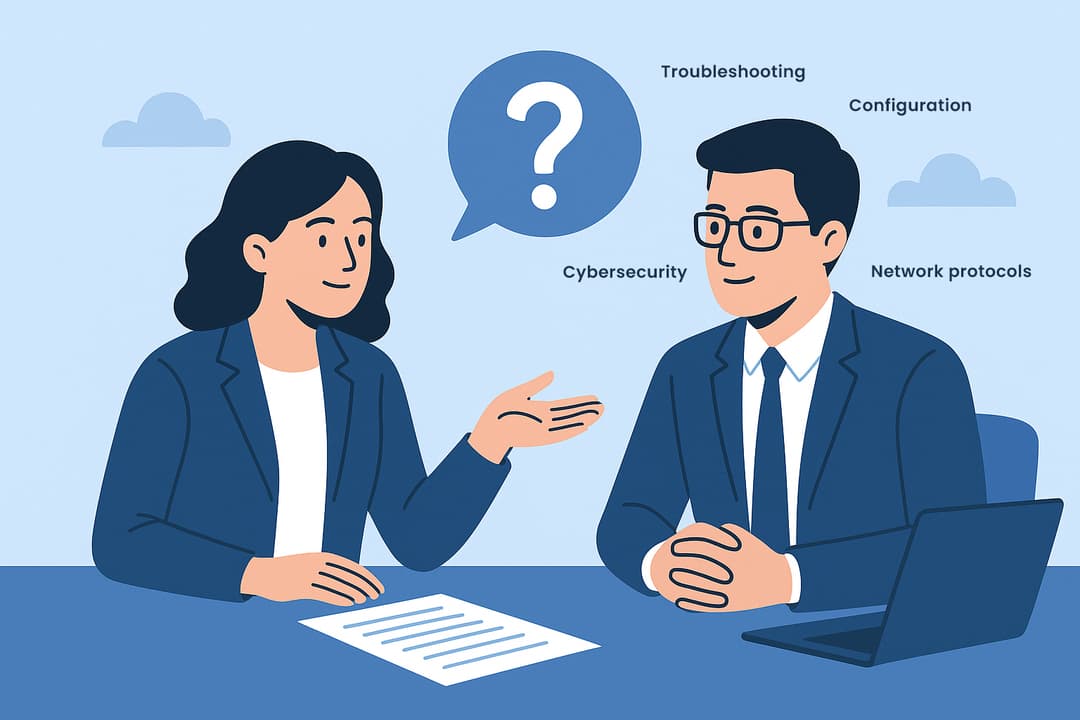
Job interviews are a critical step in your career journey, designed for employers to assess your skills, experience, and cultural fit. Understanding what is job interview questions and answers, and preparing thoughtful, well-structured responses, can significantly boost your confidence and chances of success, turning a daunting experience into an opportunity to shine. This guide focuses on equipping entry-level professionals with the strategies needed to navigate common interview scenarios and articulate their value effectively.
Mastering the Interview: Your Guide to Common Questions
Job interviews serve as a two-way street: employers evaluate your qualifications and fit, while you assess if the role and company align with your career aspirations. Effective interview preparation is crucial for job seekers because it allows you to anticipate questions, formulate compelling answers, and present your best self. The main goals of an interviewer are to gauge your skills, assess your problem-solving abilities, understand your motivations, and determine if you will integrate well into their team and company culture.

Interview questions fall into several categories: traditional, behavioral, situational, and culture-fit. Each type aims to uncover different facets of your professional persona and capabilities. The importance of tailoring answers to the specific role and company cannot be overstated; generic responses rarely make a memorable impression. Researching the company and understanding the job description are fundamental steps in crafting relevant and impactful answers.
The Foundation: Answering Core Interview Questions
Core interview questions like 'Tell me about yourself' and 'Why do you want this job?' are often the first asked, setting the tone for the entire interview. Crafting concise, compelling answers that highlight your relevant skills, enthusiasm, and understanding of the role and company is key to making a strong initial impression. These questions are your opportunity to frame the narrative of your candidacy.
To answer 'Tell me about yourself' effectively and concisely, focus on a brief professional summary that connects your past experiences and future aspirations directly to the role. Avoid a chronological life story. For 'Why do you want this job?', articulate genuine interest by referencing specific aspects of the role, company mission, or recent achievements that resonate with you. This demonstrates you've done your homework and are truly invested.
When discussing your strengths and weaknesses, be honest but strategic. For strengths, provide an example of how you've successfully applied that strength. For weaknesses, identify a genuine area for improvement, but crucially, explain the concrete steps you are taking to address it. This shows self-awareness and a commitment to growth. Addressing 'Where do you see yourself in five years?' requires a balance of career ambition and realism; show that you envision growth within the company while remaining flexible to evolving opportunities. This article equips you with specific strategies, but for even deeper dives into every aspect of the hiring process, Placed offers comprehensive interview preparation resources.
Question Category | Common Questions |
|---|
Behavioral Interview Questions: The STAR Method Explained
Behavioral interview questions delve into your past experiences to predict future performance, often starting with phrases like 'Tell me about a time when...' The STAR method (Situation, Task, Action, Result) is an invaluable framework for structuring your answers, providing clear, concise, and impactful examples of your skills and problem-solving abilities. This approach ensures you provide a complete narrative that highlights your competencies.
Understanding the purpose of behavioral questions is key: interviewers want concrete evidence of your skills, not just assertions. They believe past behavior is the best predictor of future performance. Common behavioral interview questions examples include: "Describe a time you failed," "Tell me about a time you had to persuade someone," or "Give an example of a time you worked under pressure." Each question probes a specific competency.
A detailed breakdown of the STAR method involves outlining the: Situation, setting the context for your story; the Task, explaining your responsibility or objective; the Action, detailing what you specifically did; and the Result, describing the positive outcome of your actions. Even for entry-level professionals, focus on academic projects, volunteer work, or part-time job experiences. How to quantify results in your STAR answers, even for non-sales roles, involves using metrics like time saved, efficiency improved, or positive feedback received. For instance, "My new filing system reduced document retrieval time by 15%." A polished resume is often your ticket to an interview, so ensure you optimize your resume to clearly articulate your skills and experiences.
🧠 Expert Insight: Recruiters listen for specific, actionable verbs in your STAR responses. Instead of saying "We worked on a project," say "I developed a solution," or "I implemented a strategy." Ownership in your language is critical.
Choose a relevant experience: Select an example that directly relates to the skill or competency being tested by the question.
Set the Scene (Situation): Briefly describe the background context. What was the scenario? Where were you?
Define Your Role (Task): Explain what your specific responsibility or objective was within that situation.
Detail Your Actions (Action): Describe the specific steps you took to address the task. Use "I" statements to highlight your contribution.
Highlight the Outcome (Result): Conclude with the positive results of your actions. Quantify these results whenever possible.
Situational & Culture Fit Questions: Showing Your Best Self
Situational questions test your problem-solving skills in hypothetical scenarios, while culture fit questions assess how well your values align with the company's environment. Preparing for these involves understanding the company culture and being ready to demonstrate your adaptability, teamwork, and alignment with their mission. These questions reveal your thought process and how you might act in future situations.
How to approach hypothetical 'what if' scenarios involves thinking critically and logically. Don't be afraid to take a moment to formulate your thoughts. Describe your process for analyzing the problem, considering different solutions, and predicting outcomes. Focus on demonstrating sound judgment, ethical decision-making, and proactive problem-solving. Identifying and demonstrating cultural fit requires research into the company's values, mission, and how employees describe their work environment. Look for clues on their website, social media, and Glassdoor reviews.
Questions about teamwork, conflict resolution, and leadership are common culture fit questions. When answering, emphasize collaboration, respect, and a willingness to compromise for the team's success. For conflict, focus on de-escalation, open communication, and finding common ground. Examples of answers that showcase critical thinking and emotional intelligence often involve situations where you adapted to unforeseen circumstances, learned from a mistake, or successfully navigated a complex interpersonal dynamic. Remember to craft compelling cover letters that resonate with the company's values and the specific role, reinforcing your tailored interview responses.
Your Turn to Ask: Essential Questions for the Interviewer
Asking thoughtful questions at the end of an interview is crucial for demonstrating your engagement, curiosity, and strategic thinking. It's not just about getting information; it's an opportunity to leave a lasting positive impression and assess if the role and company are the right fit for you. This signals your proactive approach and genuine interest in the opportunity.
Why asking questions is important and what it communicates: it shows you're engaged, have critical thinking skills, and are genuinely interested in the role and company beyond just getting a job. It also helps you gather valuable information to make an informed decision if an offer is extended. Categories of questions to ask include those about the role's day-to-day responsibilities, team dynamics, company culture, opportunities for growth, and the next steps in the hiring process. Avoid asking questions whose answers are easily found on the company website or about salary and benefits during initial interviews.
How to tailor your questions based on the interview stage: In an initial screening, you might ask broader questions about team goals. In a later-stage interview with a hiring manager, you can ask more specific questions about project challenges or performance metrics. Always have 2-3 prepared questions, but be ready to adapt them based on the conversation you've already had. This flexibility demonstrates active listening and thoughtful engagement.
Pros of Asking Questions | Cons of Not Asking Questions |
|---|---|
Beyond the Answers: Non-Verbal Cues & Virtual Interview Prep
While your answers are paramount, non-verbal communication and proper virtual interview etiquette play a significant role in your overall impression. From maintaining eye contact to ensuring a professional background, these often-overlooked details can greatly influence how you are perceived by the interviewer. Your presence, both in-person and virtually, speaks volumes before you even utter a word.
The impact of body language, eye contact, and active listening cannot be overstated. Sit up straight, lean slightly forward to show engagement, and maintain consistent eye contact (without staring). Nodding occasionally and offering verbal affirmations like "I understand" demonstrates active listening. These cues convey confidence, professionalism, and genuine interest. Dressing for success in both in-person and virtual settings means wearing appropriate business attire that is clean, well-fitting, and free of distractions. Always err on the side of being slightly overdressed.
Specific tips for virtual interview success include testing your tech setup (internet, microphone, camera) well in advance. Ensure good lighting, preferably natural light, facing you. Choose a clean, uncluttered, and professional background. Position your camera at eye level to facilitate natural eye contact. Managing nerves and projecting confidence involves deep breathing exercises, positive self-talk, and visualizing success. Remember, interviewers want to see you succeed. Before any interview, it's wise to ensure your application documents are strong; an AI-powered resume review can help catch any overlooked areas.
✅ Best Practice: For virtual interviews, consider placing a sticky note with a reminder to look at your camera lens, not just the screen. This simple trick significantly improves perceived eye contact.
Test all technology: Ensure your internet, camera, and microphone are working perfectly.
Optimal environment: Find a quiet, well-lit space with a clean, professional background.
Camera positioning: Elevate your camera to eye level for natural eye contact.
Dress professionally: Even if only your torso is visible, dress as you would for an in-person interview.
Minimize distractions: Turn off notifications and inform others in your household.
Active listening: Nod, smile, and offer verbal affirmations to show engagement.
Mastering job interview questions and answers is a skill developed through preparation and practice. By understanding the intent behind different question types, structuring your responses effectively, and paying attention to both verbal and non-verbal communication, you can significantly improve your interview performance. The goal isn't just to answer questions, but to tell a compelling story about your abilities and potential. Your next step is to refine your answers using the frameworks provided and practice them aloud. Placed's Interview Prep tools can help you simulate interview environments and get personalized feedback, ensuring you walk into your next interview with confidence and clarity.
🎯 Key Takeaways
Job interviews are assessments of skills, experience, and cultural fit; preparation is key to success.
The STAR method is crucial for answering behavioral questions effectively and concisely.
Asking thoughtful questions demonstrates engagement and helps you assess company fit.
Non-verbal cues and virtual interview etiquette are as important as your spoken answers.
Tailoring your answers to the specific role and company is essential for standing out.
AI tools can assist with preparation but should not replace genuine, personalized responses.
Frequently Asked Questions
What are the most common interview questions?
The most common interview questions often revolve around your background, motivation, skills, and future aspirations. Expect to hear variations of "Tell me about yourself," "Why do you want this job?," "What are your strengths and weaknesses?," and behavioral questions like "Tell me about a time you faced a challenge." These questions are designed to assess your experience, your fit for the role and company culture, and your problem-solving abilities. Your preparation should cover these core areas to ensure you can articulate your value effectively.
How should I answer 'Tell me about yourself'?
When answering "Tell me about yourself," focus on a concise, professional summary that connects your past experience and skills directly to the role you're interviewing for. Avoid recounting your entire life story. Instead, structure your answer to highlight your relevant academic background, key experiences or projects, and your passion for this particular industry or role. Conclude by explaining why you are excited about this specific opportunity and how your qualifications align with the company's needs. This demonstrates focus and relevance to the hiring manager.
What are good answers to 'Why do you want this job'?
A strong answer to "Why do you want this job?" goes beyond generic statements about salary or company reputation. Research the company's mission, values, recent projects, and the specific requirements of the role. Then, articulate how your skills, interests, and career goals align with these elements. Highlight specific aspects of the job description that excite you, mention how you can contribute to the team's success, and express genuine enthusiasm for the company's work. This shows you've done your homework and are truly invested in the opportunity.
How to answer behavioral interview questions using the STAR method?
The STAR method provides a structured way to answer behavioral interview questions by describing a specific Situation, the Task you needed to accomplish, the Action you took, and the positive Result of your actions. This framework helps you provide clear, concise, and impactful examples of your skills and experiences. Always choose examples that are relevant to the role and demonstrate the competencies the employer is seeking. Quantify your results whenever possible to show the tangible impact of your actions, even in non-sales roles.
What questions should I ask the interviewer to make a good impression?
Asking thoughtful questions at the end of an interview demonstrates your engagement, curiosity, and strategic thinking. Focus on questions that show you've researched the company and the role, and that reveal your interest in growth and contribution. Good categories include questions about the team dynamics, specific challenges of the role, opportunities for learning and development, company culture, or the next steps in the interview process. Avoid asking questions whose answers are readily available on the company website or about salary and benefits during the initial interview stages.
How can I prepare for a job interview effectively?
Effective interview preparation involves several key steps. Start by thoroughly researching the company, its mission, values, and the specific role. Review the job description carefully to identify key skills and responsibilities. Practice answering common interview questions aloud, using frameworks like the STAR method for behavioral questions. Prepare specific, compelling examples from your experience that showcase your abilities. Also, plan your professional attire, confirm logistics for in-person or virtual interviews, and formulate thoughtful questions to ask the interviewer. Consider a mock interview to refine your delivery and confidence.
Do AI scanners affect how I should prepare for an interview?
While AI scanners primarily optimize resumes and cover letters for initial screening, their impact extends to interview preparation by influencing what aspects of your profile get noticed. If your application materials were optimized for an Applicant Tracking System (ATS), ensure you can confidently speak to every keyword and skill listed on your resume during the interview. Recruiters will be looking for consistency between your written application and your spoken responses. Understanding how AI tools highlight keywords can help you anticipate areas interviewers might focus on, reinforcing the importance of tailoring your answers to the job description's language.
What are some tips for a successful virtual interview?
For a successful virtual interview, attention to detail beyond your answers is crucial. Ensure your technology is reliable: test your internet connection, microphone, and camera beforehand. Choose a quiet, well-lit space with a clean, professional background. Maintain eye contact by looking directly at your camera, not just the screen. Dress professionally, even if only your top half is visible. Practice active listening, minimize distractions, and have a glass of water nearby. Being prepared for the technical aspects allows you to focus entirely on conveying your qualifications and personality.
Job interviews are a critical step in your career journey, designed for employers to assess your skills, experience, and cultural fit. Understanding what is job interview questions and answers, and preparing thoughtful, well-structured responses, can significantly boost your confidence and chances of success, turning a daunting experience into an opportunity to shine. This guide focuses on equipping entry-level professionals with the strategies needed to navigate common interview scenarios and articulate their value effectively.
Mastering the Interview: Your Guide to Common Questions
Job interviews serve as a two-way street: employers evaluate your qualifications and fit, while you assess if the role and company align with your career aspirations. Effective interview preparation is crucial for job seekers because it allows you to anticipate questions, formulate compelling answers, and present your best self. The main goals of an interviewer are to gauge your skills, assess your problem-solving abilities, understand your motivations, and determine if you will integrate well into their team and company culture.
Interview questions fall into several categories: traditional, behavioral, situational, and culture-fit. Each type aims to uncover different facets of your professional persona and capabilities. The importance of tailoring answers to the specific role and company cannot be overstated; generic responses rarely make a memorable impression. Researching the company and understanding the job description are fundamental steps in crafting relevant and impactful answers.
The Foundation: Answering Core Interview Questions
Core interview questions like 'Tell me about yourself' and 'Why do you want this job?' are often the first asked, setting the tone for the entire interview. Crafting concise, compelling answers that highlight your relevant skills, enthusiasm, and understanding of the role and company is key to making a strong initial impression. These questions are your opportunity to frame the narrative of your candidacy.
To answer 'Tell me about yourself' effectively and concisely, focus on a brief professional summary that connects your past experiences and future aspirations directly to the role. Avoid a chronological life story. For 'Why do you want this job?', articulate genuine interest by referencing specific aspects of the role, company mission, or recent achievements that resonate with you. This demonstrates you've done your homework and are truly invested.
When discussing your strengths and weaknesses, be honest but strategic. For strengths, provide an example of how you've successfully applied that strength. For weaknesses, identify a genuine area for improvement, but crucially, explain the concrete steps you are taking to address it. This shows self-awareness and a commitment to growth. Addressing 'Where do you see yourself in five years?' requires a balance of career ambition and realism; show that you envision growth within the company while remaining flexible to evolving opportunities. This article equips you with specific strategies, but for even deeper dives into every aspect of the hiring process, Placed offers comprehensive interview preparation resources .
Question Category
Common Questions
Expert Answer Strategy
Introduction
Tell me about yourself.
Provide a concise, professional summary: past experience, relevant skills, and future aspirations tied to the role. Keep it brief and career-focused, not personal.
Motivation
Why do you want this job? Why our company?
Connect your skills, interests, and career goals to the specific role and company mission. Reference research about the company's work or values.
Strengths & Weaknesses
What are your greatest strengths/weaknesses?
Strengths: Offer a relevant strength with a brief example. Weaknesses: Choose a genuine, non-critical weakness and explain steps you're taking to improve.
Behavioral
Tell me about a time you faced a challenge/worked in a team.
Use the STAR method (Situation, Task, Action, Result) to structure your answer. Focus on positive outcomes and your specific contribution.
Situational
How would you handle a conflict with a coworker?
Describe your problem-solving process, emphasizing communication, collaboration, and a results-oriented approach. Focus on prevention and resolution.
Culture Fit
What kind of work environment do you prefer?
Align your answer with the company's known culture (collaborative, autonomous, innovative). Provide examples of thriving in similar environments.
Behavioral Interview Questions: The STAR Method Explained
Behavioral interview questions delve into your past experiences to predict future performance, often starting with phrases like 'Tell me about a time when...' The STAR method (Situation, Task, Action, Result) is an invaluable framework for structuring your answers, providing clear, concise, and impactful examples of your skills and problem-solving abilities. This approach ensures you provide a complete narrative that highlights your competencies.
Understanding the purpose of behavioral questions is key: interviewers want concrete evidence of your skills, not just assertions. They believe past behavior is the best predictor of future performance. Common behavioral interview questions examples include: "Describe a time you failed," "Tell me about a time you had to persuade someone," or "Give an example of a time you worked under pressure." Each question probes a specific competency.
A detailed breakdown of the STAR method involves outlining the: Situation , setting the context for your story; the Task , explaining your responsibility or objective; the Action , detailing what you specifically did; and the Result , describing the positive outcome of your actions. Even for entry-level professionals, focus on academic projects, volunteer work, or part-time job experiences. How to quantify results in your STAR answers, even for non-sales roles, involves using metrics like time saved, efficiency improved, or positive feedback received. For instance, "My new filing system reduced document retrieval time by 15%." A polished resume is often your ticket to an interview, so ensure you optimize your resume to clearly articulate your skills and experiences.
🧠 Expert Insight: Recruiters listen for specific, actionable verbs in your STAR responses. Instead of saying "We worked on a project," say "I developed a solution," or "I implemented a strategy." Ownership in your language is critical.
Choose a relevant experience: Select an example that directly relates to the skill or competency being tested by the question.
Set the Scene (Situation): Briefly describe the background context. What was the scenario? Where were you?
Define Your Role (Task): Explain what your specific responsibility or objective was within that situation.
Detail Your Actions (Action): Describe the specific steps you took to address the task. Use "I" statements to highlight your contribution.
Highlight the Outcome (Result): Conclude with the positive results of your actions. Quantify these results whenever possible.
Situational & Culture Fit Questions: Showing Your Best Self
Situational questions test your problem-solving skills in hypothetical scenarios, while culture fit questions assess how well your values align with the company's environment. Preparing for these involves understanding the company culture and being ready to demonstrate your adaptability, teamwork, and alignment with their mission. These questions reveal your thought process and how you might act in future situations.
How to approach hypothetical 'what if' scenarios involves thinking critically and logically. Don't be afraid to take a moment to formulate your thoughts. Describe your process for analyzing the problem, considering different solutions, and predicting outcomes. Focus on demonstrating sound judgment, ethical decision-making, and proactive problem-solving. Identifying and demonstrating cultural fit requires research into the company's values, mission, and how employees describe their work environment. Look for clues on their website, social media, and Glassdoor reviews.
Questions about teamwork, conflict resolution, and leadership are common culture fit questions. When answering, emphasize collaboration, respect, and a willingness to compromise for the team's success. For conflict, focus on de-escalation, open communication, and finding common ground. Examples of answers that showcase critical thinking and emotional intelligence often involve situations where you adapted to unforeseen circumstances, learned from a mistake, or successfully navigated a complex interpersonal dynamic. Remember to craft compelling cover letters that resonate with the company's values and the specific role, reinforcing your tailored interview responses.
Your Turn to Ask: Essential Questions for the Interviewer
Asking thoughtful questions at the end of an interview is crucial for demonstrating your engagement, curiosity, and strategic thinking. It's not just about getting information; it's an opportunity to leave a lasting positive impression and assess if the role and company are the right fit for you. This signals your proactive approach and genuine interest in the opportunity.
Why asking questions is important and what it communicates: it shows you're engaged, have critical thinking skills, and are genuinely interested in the role and company beyond just getting a job. It also helps you gather valuable information to make an informed decision if an offer is extended. Categories of questions to ask include those about the role's day-to-day responsibilities, team dynamics, company culture, opportunities for growth, and the next steps in the hiring process. Avoid asking questions whose answers are easily found on the company website or about salary and benefits during initial interviews.
How to tailor your questions based on the interview stage: In an initial screening, you might ask broader questions about team goals. In a later-stage interview with a hiring manager, you can ask more specific questions about project challenges or performance metrics. Always have 2-3 prepared questions, but be ready to adapt them based on the conversation you've already had. This flexibility demonstrates active listening and thoughtful engagement.
Pros of Asking Questions
Cons of Not Asking Questions
Demonstrates genuine interest and enthusiasm.
Can appear disengaged or uninterested in the role.
Shows critical thinking and proactive engagement.
Misses a chance to gather crucial information about the role/company.
Helps you assess if the role and company are a good fit for you.
Prevents you from clarifying expectations or understanding company culture.
Leaves a lasting positive impression on the interviewer.
Can make you seem unprepared or lacking initiative.
Beyond the Answers: Non-Verbal Cues & Virtual Interview Prep
While your answers are paramount, non-verbal communication and proper virtual interview etiquette play a significant role in your overall impression. From maintaining eye contact to ensuring a professional background, these often-overlooked details can greatly influence how you are perceived by the interviewer. Your presence, both in-person and virtually, speaks volumes before you even utter a word.
The impact of body language, eye contact, and active listening cannot be overstated. Sit up straight, lean slightly forward to show engagement, and maintain consistent eye contact (without staring). Nodding occasionally and offering verbal affirmations like "I understand" demonstrates active listening. These cues convey confidence, professionalism, and genuine interest. Dressing for success in both in-person and virtual settings means wearing appropriate business attire that is clean, well-fitting, and free of distractions. Always err on the side of being slightly overdressed.
Specific tips for virtual interview success include testing your tech setup (internet, microphone, camera) well in advance. Ensure good lighting, preferably natural light, facing you. Choose a clean, uncluttered, and professional background. Position your camera at eye level to facilitate natural eye contact. Managing nerves and projecting confidence involves deep breathing exercises, positive self-talk, and visualizing success. Remember, interviewers want to see you succeed. Before any interview, it's wise to ensure your application documents are strong; an AI-powered resume review can help catch any overlooked areas.
✅ Best Practice: For virtual interviews, consider placing a sticky note with a reminder to look at your camera lens, not just the screen. This simple trick significantly improves perceived eye contact.
Test all technology: Ensure your internet, camera, and microphone are working perfectly.
Optimal environment: Find a quiet, well-lit space with a clean, professional background.
Camera positioning: Elevate your camera to eye level for natural eye contact.
Dress professionally: Even if only your torso is visible, dress as you would for an in-person interview.
Minimize distractions: Turn off notifications and inform others in your household.
Active listening: Nod, smile, and offer verbal affirmations to show engagement.
Mastering job interview questions and answers is a skill developed through preparation and practice. By understanding the intent behind different question types, structuring your responses effectively, and paying attention to both verbal and non-verbal communication, you can significantly improve your interview performance. The goal isn't just to answer questions, but to tell a compelling story about your abilities and potential. Your next step is to refine your answers using the frameworks provided and practice them aloud. Placed's Interview Prep tools can help you simulate interview environments and get personalized feedback, ensuring you walk into your next interview with confidence and clarity.