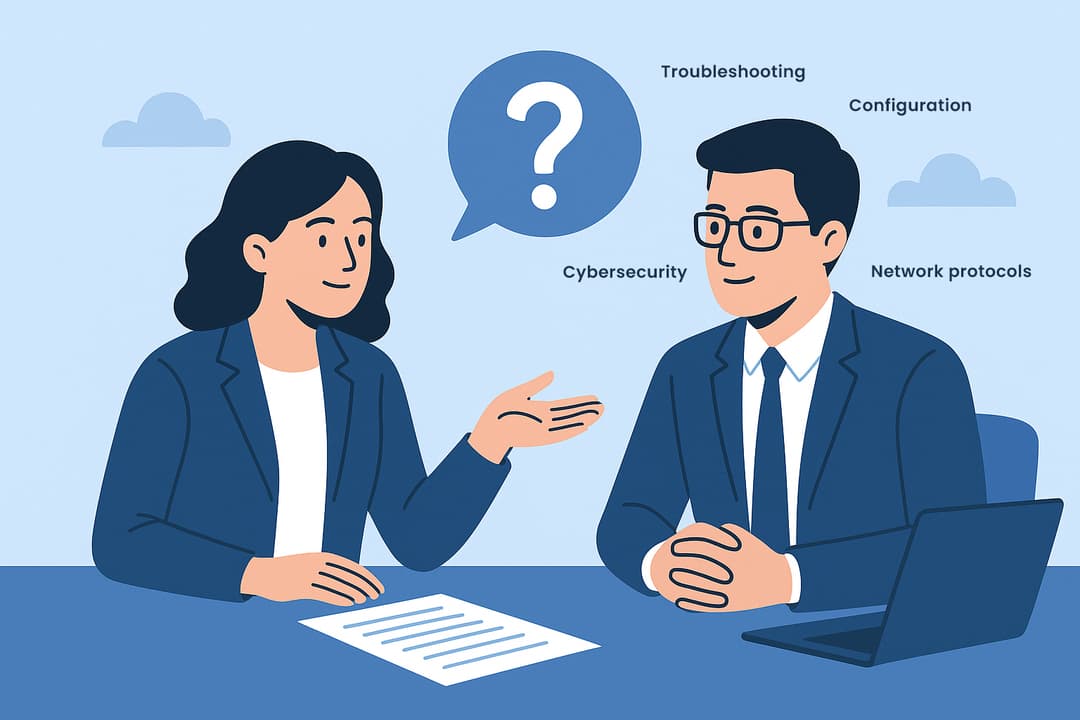
Understanding what is job interview questions and how to answer them effectively is fundamental for any job seeker, especially those new to the professional world. Job interviews are not just about proving you have the right skills; they are about demonstrating your potential, cultural fit, and problem-solving abilities. By dissecting common interview questions, you can prepare strategic responses that highlight your strengths and align with the employer's needs, turning a nerve-wracking experience into an opportunity to shine. This guide will equip entry-level professionals with the frameworks and insights needed to navigate the interview process with confidence.
Understanding the Interview: Why They Ask What They Ask
Job interviews are designed to assess your skills, experience, personality, and cultural fit within a company. Recruiters ask specific questions to gauge your problem-solving abilities, teamwork, leadership potential, and how you handle challenges. Understanding the intent behind each question allows you to craft more strategic and impactful responses, moving beyond surface-level answers to truly showcase your value.
From a recruiter's perspective, an interview is a critical data-gathering session. They're trying to validate what they saw on your resume, assess your soft skills, and determine if you'd be a good addition to their team. Every question serves a purpose, whether it's to uncover your work ethic, your ability to collaborate, or how you react under pressure.
Interview questions are broadly categorized to probe different aspects of your candidacy. Traditional questions cover your background and motivations, behavioral questions explore past actions to predict future performance, and situational questions test your problem-solving skills with hypothetical scenarios. Cultural fit questions aim to see if your values align with the company's environment, while logistical questions clarify practical aspects of employment.
Aligning your answers with the job description and company values is paramount. Before any interview, meticulously review the job posting for keywords and required competencies. Research the company's mission, values, and recent projects. This preparation enables you to tailor your responses, demonstrating not just that you can do the job, but that you understand and are excited about the company's specific context.
Understanding why an interviewer asks a particular question is crucial for effective responses. Knowing the underlying intent allows you to provide a targeted answer that addresses their concerns or highlights the specific qualities they are seeking. This insight moves you beyond generic answers to deliver compelling, relevant information that truly resonates.
Mastering the Most Common Interview Questions
Preparing for frequently asked interview questions is key to confidence and success. Questions like 'Tell me about yourself' are opportunities to deliver a concise, compelling pitch, while 'Why do you want to work here?' tests your research and genuine interest. For 'Strengths and weaknesses,' focus on relevant skills and demonstrate self-awareness with a growth mindset, always linking back to the role.

The dreaded 'Tell me about yourself' is often the first question. Don't recount your entire life story. Instead, use the 'present-past-future' framework: start with your current role or academic status, briefly touch on relevant past experiences or skills, and then connect it to why you're interested in this specific opportunity and what you hope to achieve. Keep it to 60-90 seconds.
When asked 'Why do you want to work here?', your answer should showcase genuine research and enthusiasm. Mention specific aspects of the company's mission, products, culture, or recent achievements that genuinely appeal to you. Connect these points to your own career goals and how you believe you can contribute to their success. This demonstrates proactive engagement rather than just seeking any job.
Addressing 'What are your strengths and weaknesses?' requires honesty tempered with strategic framing. For strengths, choose 2-3 that are directly relevant to the job and provide a brief example. For weaknesses, select a genuine area for development that isn't a core requirement for the role. Crucially, explain what steps you are taking to improve upon it, showcasing self-awareness and a proactive attitude towards growth.
'Where do you see yourself in five years?' is a test of your ambition and alignment. Articulate realistic career aspirations that demonstrate growth and a desire to contribute meaningfully. Show how this role fits into your broader career trajectory and express your hope to grow within the company, indicating loyalty and a long-term perspective. Avoid overly specific job titles that might not exist.
If you're asked 'Why are you leaving your current job?' or 'Why was there a gap in your employment?', maintain professionalism. Focus on forward-looking reasons like seeking new challenges, growth opportunities, or a better fit for your long-term goals. For employment gaps, explain the situation factually and briefly, highlighting any personal development, volunteering, or skill acquisition that occurred during that time. Never speak negatively about past employers.
Question Type | Example Question |
|---|
Navigating Behavioral and Situational Interview Questions (STAR Method)
Behavioral and situational questions, such as 'Tell me about a time you faced a challenge,' aim to predict future performance based on past experiences. The STAR method (Situation, Task, Action, Result) is an effective framework for structuring your answers, providing clear, concise, and compelling narratives that highlight your skills and achievements. This approach ensures you cover all necessary details.

Behavioral interview questions ask about past experiences to gauge how you've handled specific situations, assuming past behavior predicts future performance. Examples include 'Describe a time you demonstrated leadership' or 'How do you handle conflict?' Situational questions, conversely, present hypothetical scenarios and ask how you would respond, assessing your problem-solving and decision-making skills in a new context, such as 'What would you do if a team member wasn't pulling their weight?'
The STAR method is your best friend for these types of questions. Here's how it breaks down:
Situation: Set the scene. Briefly describe the context or background of the event. Who was involved? When and where did it happen? Keep this concise.
Task: Explain your role and responsibilities in that situation. What was the goal you were trying to achieve or the problem you needed to solve?
Action: Detail the specific steps you took to address the task. This is where you highlight your skills and contributions. Use 'I' statements to emphasize your direct involvement.
Result: Describe the outcome of your actions. What happened? What did you accomplish? Quantify your results whenever possible with numbers or percentages to show impact. What did you learn from the experience?
Common behavioral interview questions often revolve around themes like teamwork ('Tell me about a time you worked effectively as part of a team'), conflict resolution ('Describe a disagreement you had with a colleague and how you resolved it'), overcoming challenges ('Give an example of a time you failed and what you learned'), and leadership ('Tell me about a time you took initiative'). For entry-level candidates, draw examples from academic projects, internships, volunteer work, or even part-time jobs.
Tailoring STAR responses to different industries and career levels involves selecting stories that highlight relevant skills. For tech roles, focus on problem-solving and technical implementation. For healthcare, emphasize empathy and critical thinking. Entry-level candidates should lean on academic achievements, group projects, and transferable skills from extracurricular activities. Always connect your story back to the competencies required for the role you're seeking.
To prepare, create a bank of 5-7 compelling STAR stories before your interview. Think about situations where you demonstrated key skills listed in job descriptions: problem-solving, teamwork, communication, leadership, adaptability, and initiative. Practice telling these stories out loud, ensuring they flow smoothly and clearly articulate your contributions and results. This preparation will make you feel more confident and articulate during the actual interview.
📋 Checklist: Preparing Your STAR Stories * Identify 5-7 key skills required for the target role. * Brainstorm specific experiences (academic, work, volunteer) where you demonstrated each skill. * For each experience, outline the Situation, Task, Action, and Result. * Quantify results whenever possible (e.g., "reduced project time by 15%", "increased user engagement by 20%"). * Practice telling each story concisely, aiming for 1-2 minutes per story. * Ensure each story has a clear beginning, middle, and end, and highlights a positive outcome or significant learning.
🎯 Key Takeaways
Understand the intent behind each interview question to craft strategic answers.
Master the 'present-past-future' framework for 'Tell me about yourself' and research for 'Why here?'.
Utilize the STAR method for behavioral questions to provide structured, compelling narratives.
Prepare thoughtful questions for the interviewer to demonstrate engagement and gather information.
Project confidence and professionalism through strong non-verbal cues and proper interview etiquette.
Leverage AI tools for practice and feedback to refine your interview performance.
Frequently Asked Questions
What are the most common interview questions for entry-level jobs?
For entry-level roles, you can expect questions like 'Tell me about yourself,' 'Why do you want to work here?', 'What are your strengths and weaknesses?', 'Describe a time you faced a challenge,' and 'Where do you see yourself in five years?'. These questions aim to assess your basic qualifications, motivation, self-awareness, and potential for growth within the company. Interviewers also look for your ability to communicate clearly and demonstrate a foundational understanding of professional conduct.
How do I answer 'Tell me about yourself' effectively?
The most effective way to answer 'Tell me about yourself' is using the 'present-past-future' framework. Start with your current role or academic standing, briefly touch upon relevant past experiences or skills that led you here, and then connect it to your future aspirations and why this specific role aligns with them. Keep it concise, professional, and directly relevant to the job you're interviewing for, avoiding overly personal details. This allows you to control the narrative and highlight your most pertinent qualifications right from the start.
What is the STAR method and how do I use it?
The STAR method is a structured approach to answering behavioral interview questions, which ask about past experiences. STAR stands for Situation, Task, Action, and Result. You start by describing the Situation or context of your experience, then the Task you needed to accomplish. Next, detail the specific Actions you took to address the task, and finally, explain the positive Result of your actions. This method ensures your answers are comprehensive, provide concrete examples, and clearly demonstrate your skills and impact.
What questions should I ask the interviewer at the end?
Asking thoughtful questions demonstrates your engagement and helps you assess the role. Consider questions about the team's daily responsibilities, the biggest challenges facing the department, opportunities for growth and development, or how success is measured in the role. You might also ask about the company culture or the next steps in the hiring process. Avoid questions whose answers are easily found on the company website or questions solely focused on salary or benefits at this stage.
How can I answer questions about my weaknesses constructively?
When asked about weaknesses, choose a genuine area for development that isn't critical to the job's core functions. Frame your answer by acknowledging the weakness, then immediately follow up with concrete steps you are taking to improve it. For example, if public speaking is a weakness, you could mention joining a Toastmasters club or actively seeking opportunities to present. This demonstrates self-awareness, a growth mindset, and a commitment to continuous improvement, which are highly valued by employers.
What are some tips for a successful video interview?
For a successful video interview, ensure you have a quiet, well-lit space with a clean background. Test your internet connection, microphone, and camera beforehand. Dress professionally, just as you would for an in-person interview. Maintain eye contact by looking at your camera, not just the screen. Practice active listening and avoid interruptions. Have a glass of water nearby and your notes organized. Treat it with the same seriousness as a face-to-face meeting to convey professionalism and preparedness.
How important is body language in an interview?
Body language is incredibly important in an interview, often conveying as much as your verbal responses. Non-verbal cues like maintaining appropriate eye contact, having an open posture, using controlled hand gestures, and nodding to show active listening can project confidence, engagement, and professionalism. Conversely, fidgeting, slouching, or avoiding eye contact can signal nervousness or disinterest. Your body language reinforces your verbal message and contributes significantly to the interviewer's overall impression of you.
Should I prepare answers for every possible question?
Attempting to memorize answers for every single possible question is impractical and can make you sound robotic. Instead, focus on understanding the types of questions asked (behavioral, situational, technical, etc.) and prepare adaptable frameworks and a few compelling stories from your experience. Practice articulating your skills, motivations, and career goals clearly. This approach allows you to confidently tailor your responses on the fly, demonstrating genuine thought and flexibility rather than rote memorization. You can use tools for interview preparation resources to practice common questions and get feedback, but the goal is always authentic, well-structured answers.
Understanding what is job interview questions and how to answer them effectively is fundamental for any job seeker, especially those new to the professional world. Job interviews are not just about proving you have the right skills; they are about demonstrating your potential, cultural fit, and problem-solving abilities. By dissecting common interview questions, you can prepare strategic responses that highlight your strengths and align with the employer's needs, turning a nerve-wracking experience into an opportunity to shine. This guide will equip entry-level professionals with the frameworks and insights needed to navigate the interview process with confidence.
Understanding the Interview: Why They Ask What They Ask
Job interviews are designed to assess your skills, experience, personality, and cultural fit within a company. Recruiters ask specific questions to gauge your problem-solving abilities, teamwork, leadership potential, and how you handle challenges. Understanding the intent behind each question allows you to craft more strategic and impactful responses, moving beyond surface-level answers to truly showcase your value.
From a recruiter's perspective, an interview is a critical data-gathering session. They're trying to validate what they saw on your resume, assess your soft skills, and determine if you'd be a good addition to their team. Every question serves a purpose, whether it's to uncover your work ethic, your ability to collaborate, or how you react under pressure.
Interview questions are broadly categorized to probe different aspects of your candidacy. Traditional questions cover your background and motivations, behavioral questions explore past actions to predict future performance, and situational questions test your problem-solving skills with hypothetical scenarios. Cultural fit questions aim to see if your values align with the company's environment, while logistical questions clarify practical aspects of employment.
Aligning your answers with the job description and company values is paramount. Before any interview, meticulously review the job posting for keywords and required competencies. Research the company's mission, values, and recent projects. This preparation enables you to tailor your responses, demonstrating not just that you can do the job, but that you understand and are excited about the company's specific context.
Understanding why an interviewer asks a particular question is crucial for effective responses. Knowing the underlying intent allows you to provide a targeted answer that addresses their concerns or highlights the specific qualities they are seeking. This insight moves you beyond generic answers to deliver compelling, relevant information that truly resonates.
Mastering the Most Common Interview Questions
Preparing for frequently asked interview questions is key to confidence and success. Questions like 'Tell me about yourself' are opportunities to deliver a concise, compelling pitch, while 'Why do you want to work here?' tests your research and genuine interest. For 'Strengths and weaknesses,' focus on relevant skills and demonstrate self-awareness with a growth mindset, always linking back to the role.
The dreaded 'Tell me about yourself' is often the first question. Don't recount your entire life story. Instead, use the 'present-past-future' framework: start with your current role or academic status, briefly touch on relevant past experiences or skills, and then connect it to why you're interested in this specific opportunity and what you hope to achieve. Keep it to 60-90 seconds.
When asked 'Why do you want to work here?', your answer should showcase genuine research and enthusiasm. Mention specific aspects of the company's mission, products, culture, or recent achievements that genuinely appeal to you. Connect these points to your own career goals and how you believe you can contribute to their success. This demonstrates proactive engagement rather than just seeking any job.
Addressing 'What are your strengths and weaknesses?' requires honesty tempered with strategic framing. For strengths, choose 2-3 that are directly relevant to the job and provide a brief example. For weaknesses, select a genuine area for development that isn't a core requirement for the role. Crucially, explain what steps you are taking to improve upon it, showcasing self-awareness and a proactive attitude towards growth.
'Where do you see yourself in five years?' is a test of your ambition and alignment. Articulate realistic career aspirations that demonstrate growth and a desire to contribute meaningfully. Show how this role fits into your broader career trajectory and express your hope to grow within the company, indicating loyalty and a long-term perspective. Avoid overly specific job titles that might not exist.
If you're asked 'Why are you leaving your current job?' or 'Why was there a gap in your employment?', maintain professionalism. Focus on forward-looking reasons like seeking new challenges, growth opportunities, or a better fit for your long-term goals. For employment gaps, explain the situation factually and briefly, highlighting any personal development, volunteering, or skill acquisition that occurred during that time. Never speak negatively about past employers.
Question Type
Example Question
Strategy for Entry-Level
Self-Introduction
'Tell me about yourself.'
Use the 'present-past-future' framework: current studies/role, relevant academic/internship experience, and how this role fits your future aspirations.
Motivation/Fit
'Why do you want to work here?'
Show genuine research on the company's mission, values, or projects. Connect their work to your interests and how you can contribute.
Strengths/Weaknesses
'What are your greatest strengths and weaknesses?'
Strengths: 2-3 relevant skills with brief examples. Weaknesses: one non-critical area, followed by steps you're taking to improve.
Behavioral (Challenge)
'Tell me about a time you faced a challenge.'
Use the STAR method: describe a Situation, your Task, the Actions you took, and the positive Result. Focus on problem-solving.
Career Goals
'Where do you see yourself in five years?'
Express a desire for growth and learning within the company, aligning your aspirations with potential opportunities in the role.
Navigating Behavioral and Situational Interview Questions (STAR Method)
Behavioral and situational questions, such as 'Tell me about a time you faced a challenge,' aim to predict future performance based on past experiences. The STAR method (Situation, Task, Action, Result) is an effective framework for structuring your answers, providing clear, concise, and compelling narratives that highlight your skills and achievements. This approach ensures you cover all necessary details.
Behavioral interview questions ask about past experiences to gauge how you've handled specific situations, assuming past behavior predicts future performance. Examples include 'Describe a time you demonstrated leadership' or 'How do you handle conflict?' Situational questions, conversely, present hypothetical scenarios and ask how you would respond, assessing your problem-solving and decision-making skills in a new context, such as 'What would you do if a team member wasn't pulling their weight?'
The STAR method is your best friend for these types of questions. Here's how it breaks down:
Situation: Set the scene. Briefly describe the context or background of the event. Who was involved? When and where did it happen? Keep this concise.
Task: Explain your role and responsibilities in that situation. What was the goal you were trying to achieve or the problem you needed to solve?
Action: Detail the specific steps you took to address the task. This is where you highlight your skills and contributions. Use 'I' statements to emphasize your direct involvement.
Result: Describe the outcome of your actions. What happened? What did you accomplish? Quantify your results whenever possible with numbers or percentages to show impact. What did you learn from the experience?
Common behavioral interview questions often revolve around themes like teamwork ('Tell me about a time you worked effectively as part of a team'), conflict resolution ('Describe a disagreement you had with a colleague and how you resolved it'), overcoming challenges ('Give an example of a time you failed and what you learned'), and leadership ('Tell me about a time you took initiative'). For entry-level candidates, draw examples from academic projects, internships, volunteer work, or even part-time jobs.
Tailoring STAR responses to different industries and career levels involves selecting stories that highlight relevant skills. For tech roles, focus on problem-solving and technical implementation. For healthcare, emphasize empathy and critical thinking. Entry-level candidates should lean on academic achievements, group projects, and transferable skills from extracurricular activities. Always connect your story back to the competencies required for the role you're seeking.
To prepare, create a bank of 5-7 compelling STAR stories before your interview. Think about situations where you demonstrated key skills listed in job descriptions: problem-solving, teamwork, communication, leadership, adaptability, and initiative. Practice telling these stories out loud, ensuring they flow smoothly and clearly articulate your contributions and results. This preparation will make you feel more confident and articulate during the actual interview.
📋 Checklist: Preparing Your STAR Stories
* Identify 5-7 key skills required for the target role.
* Brainstorm specific experiences (academic, work, volunteer) where you demonstrated each skill.
* For each experience, outline the Situation, Task, Action, and Result.
* Quantify results whenever possible (e.g., "reduced project time by 15%", "increased user engagement by 20%").
* Practice telling each story concisely, aiming for 1-2 minutes per story.
* Ensure each story has a clear beginning, middle, and end, and highlights a positive outcome or significant learning.