Published in Resume Mistakes
Best Resume to Get Hired: Your Strategic Guide to Standing Out
Craft a resume that captivates both AI and human recruiters, even as an entry-level professional.
PE
By Placed Editorial
11 min read
Landing your first significant role or making a pivotal career move requires more than just a list of past jobs. To create the best resume to get hired, you need a document that strategically communicates your value, potential, and fit for a specific role. For entry-level professionals, this means understanding how to translate academic projects, volunteer work, or internships into compelling evidence of your capabilities, ensuring your application rises above the competition.
Not sure what’s holding your search back? Take the 60-second quiz and get your guide →
What Makes a Resume 'The Best' in Today's Job Market?
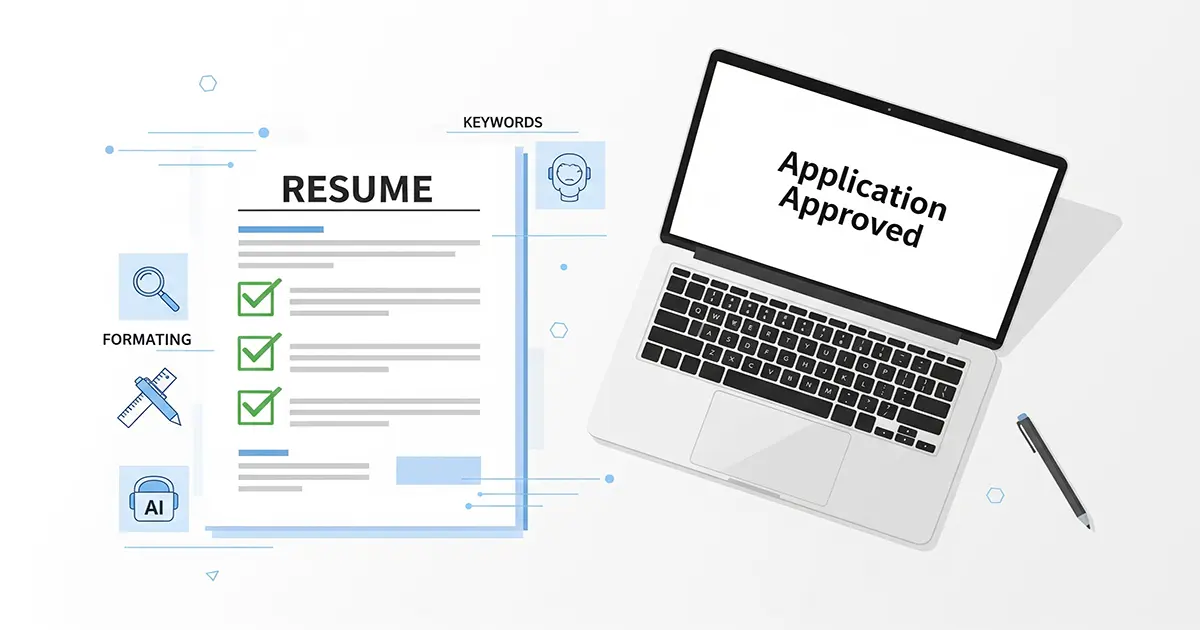
The 'best' resume isn't just about looking good; it's a strategically crafted marketing document that speaks directly to both Applicant Tracking Systems (ATS) and human hiring managers. It's concise, achievement-focused, tailored to each role, and clearly demonstrates your value, making it easy for employers to see you as the ideal candidate.
Your resume serves a dual purpose: it must first pass through automated systems and then capture the attention of a human recruiter. This means balancing technical optimization with compelling storytelling. The shift is from a mere job description to a powerful marketing document that sells your unique skills and potential.
Key characteristics of a winning resume include being highly tailored to the specific job, concise enough to convey information quickly, rigorously achievement-oriented, and rich with relevant keywords. For instance, instead of listing 'managed social media accounts,' an entry-level professional might write, 'Grew social media engagement by 15% across Instagram and LinkedIn by implementing a new content calendar, demonstrating clear impact.
📊 Most recruiters spend only seconds on a first pass of a resume, underscoring the need for clarity and impact. [Indeed]
Beat the Bots: Mastering ATS Optimization for Your Resume

Applicant Tracking Systems (ATS) are software programs that scan resumes for keywords and formatting, filtering out up to 75% of applications before a human ever sees them. To beat the bots, use clear, standard formatting, embed relevant keywords directly from the job description, and avoid complex graphics or tables that can confuse the system.
Understanding what ATS is and why it matters is fundamental to getting your resume seen. These systems parse your document, extracting information into a standardized profile. Common ATS pitfalls include using fancy fonts, elaborate graphics, or non-standard section titles, which can render your resume unreadable to the software.
Strategies for effective keyword integration involve carefully analyzing the job description. Identify exact keywords and semantic variations, then naturally weave them into your professional summary, skills section, and work experience bullet points. For example, if a job description lists 'customer relationship management,' ensure that phrase, or a close variant like 'CRM,' appears in your resume.
✅ Best practices for ATS-friendly formatting include using simple, clean layouts, standard headings (e.g., 'Work Experience,' 'Education,' 'Skills'), and common fonts like Arial or Calibri. Avoid text boxes, headers/footers for critical information, and excessive white space. Placed offers an AI resume review feature that can help you check your ATS score and identify areas for improvement before you apply.
Crafting Your Narrative: Content That Captivates Hiring Managers

Once past the ATS, your resume must tell a compelling story that highlights your unique value and potential. Focus on quantifiable achievements over mere responsibilities, use strong action verbs, and tailor your professional summary and experience sections to directly address the employer's needs and the job's requirements.
A strong professional summary or objective at the top of your resume is crucial, especially for entry-level professionals. This short paragraph should act as an elevator pitch, showcasing your key skills, career goals, and what you bring to the table. Tailor it to each specific role, highlighting how your aspirations align with the company's needs.
Shifting from duties to achievements is perhaps the most impactful change you can make. Instead of stating 'Responsible for managing social media,' use the CAR method (Challenge, Action, Result). For example, 'Challenged to increase online engagement, I Actioned a new content strategy, resulting in a Result of 20% growth in followers and 15% higher post interactions.' Even for entry-level roles, examples of quantifying impact can include 'Assisted with data entry for 100+ client records, improving database accuracy by 5%,' or 'Organized 3 departmental events, improving team cohesion and participation by 25%.'
Using powerful action verbs (e.g., developed, analyzed, optimized, launched, managed, collaborated) makes your accomplishments more dynamic and professional. For those with limited direct experience, focus on showcasing transferable skills gained through academic projects, volunteer work, or part-time jobs. These might include leadership, problem-solving, communication, or project management.
Choosing the Right Resume Format: Chronological, Functional, or Combination?
The ideal resume format depends on your career stage and specific circumstances. A chronological format is standard for stable career paths, while a functional resume can highlight skills for career changers or those with gaps. A combination format offers flexibility, blending skill emphasis with work history, ensuring your strengths are front and center.
Each format has distinct advantages and disadvantages. Here's a breakdown to help you decide:
| Format Type | Best For | Key Features | Considerations |
|---|---|---|---|
| Chronological | Stable career progression, extensive experience in one field, traditional industries. | Lists work history in reverse chronological order, emphasizing job titles and companies. | Exposes employment gaps; less effective for career changers or those with diverse, unrelated experience. |
| Functional | Career changers, those with employment gaps, limited direct experience, or diverse skill sets. | Highlights skills and abilities categorized by theme, with a brief summary of work history. | Can be viewed with suspicion by recruiters (hiding something); less common for entry-level. |
| Combination | Entry-level professionals, those with some experience but needing to emphasize specific skills, career changers. | Blends skill-based sections with a chronological work history, offering flexibility. | Can be longer; requires careful balancing of skills and experience. |
For entry-level professionals, a combination format is often recommended. It allows you to emphasize relevant skills and projects (e.g., from academic work or internships) at the top, followed by a concise chronological listing of any work experience. This approach helps you showcase your potential and transferable skills while still providing a clear, albeit shorter, work history.
Tailoring Your Resume: The Secret Weapon for Every Application
Generic resumes rarely succeed. Tailoring means customizing your resume for each specific job by aligning your skills and experiences with the job description's requirements. This involves strategically selecting keywords, rephrasing bullet points, and highlighting relevant projects, demonstrating to the employer that you are a perfect fit.
Why is tailoring non-negotiable? Recruiters are looking for a direct match. A generic resume forces them to connect the dots, which they simply don't have time for. Tailoring demonstrates your genuine interest and saves the hiring manager valuable time.
- Analyze the Job Description: Read the job description thoroughly, highlighting key skills, responsibilities, and qualifications. Pay attention to frequently repeated terms.
- Identify Keywords: Extract the most important keywords and phrases. These are the terms the ATS will be scanning for and what the hiring manager expects to see.
- Match Your Skills and Experience: Go through your own experience and identify instances where you've used those keywords or demonstrated those skills.
- Customize Your Professional Summary: Rewrite your summary to directly address the job's core requirements, using keywords you've identified.
- Rephrase Bullet Points: Adjust your work experience and project bullet points to align with the job description's language. For example, if the JD asks for 'client communication,' change 'spoke with customers' to 'communicated with clients to resolve inquiries.'
- Highlight Relevant Projects: For entry-level roles, emphasize academic projects, internships, or volunteer work that directly relate to the job's requirements.
The balance between tailoring and maintaining authenticity is crucial. Never fabricate experience, but always emphasize the most relevant aspects of your background. Placed's resume builder can streamline this process, allowing you to easily duplicate and modify your resume for different applications, ensuring each one is perfectly tailored.
Beyond the Resume: Complementary Strategies to Get Hired
A stellar resume is just one piece of the puzzle. To truly maximize your chances of getting hired, complement it with a compelling cover letter, an optimized LinkedIn profile that reinforces your brand, and thorough interview preparation. These elements work together to present a cohesive and irresistible candidate profile.
The synergy between your resume, cover letter, and LinkedIn profile cannot be overstated. Your resume gets you through the door, your cover letter explains your 'why,' and your LinkedIn profile provides social proof and expands on your professional narrative. Ensure consistency in your personal branding across all these platforms.
💡 Tip: For an impactful cover letter, focus on telling a story that complements your resume, explaining your motivation for the specific role and company, and highlighting 1-2 key achievements that aren't immediately obvious from your resume. Avoid simply repeating your resume content.
Key elements of an optimized LinkedIn profile include a professional headshot, a compelling headline that uses keywords, a detailed 'About' section, and comprehensive experience and skills sections. Actively engage with your industry, connect with professionals, and request recommendations to boost your profile's credibility.
Finally, the importance of interview preparation cannot be overlooked. A perfectly crafted resume will get you the interview, but strong preparation is what lands the job offer. Research the company and role, practice common interview questions, and prepare insightful questions to ask the interviewer.
🎯 Key Takeaways: Your Action Plan for a Winning Resume
To create the best resume for getting hired, remember to optimize for ATS, quantify your achievements, choose the right format for your career stage, and tailor every application. Your resume is a living document – continuously refine it based on feedback and evolving job market demands to keep it sharp and effective.
- Optimize for ATS: Use clear formatting and relevant keywords from job descriptions.
- Quantify Everything: Translate duties into measurable achievements, even for entry-level roles.
- Tailor Relentlessly: Customize your resume for every single job application.
- Choose Wisely: Select the resume format (combination is often best for entry-level) that highlights your strengths.
- Be Holistic: Integrate your resume with a strong cover letter and LinkedIn profile.
- Seek Feedback: Don't be afraid to get your resume reviewed by career experts or peers.
Frequently Asked Questions
What should be on a resume to get hired as an entry-level professional?
For entry-level professionals, a resume should include a strong professional summary, education, relevant projects (academic or volunteer), internships, part-time work, and a skills section. Focus on transferable skills, quantifiable achievements from any experience, and tailor keywords directly from the job description to showcase your potential.
How long should my resume be to get hired, especially with limited experience?
For entry-level professionals, your resume should ideally be one page. Recruiters spend only seconds on an initial scan, so conciseness is key. Focus on quality over quantity, including only the most relevant and impactful experiences and skills that directly align with the job you're applying for.
How can I make my resume stand out to recruiters when I have little experience?
To make your resume stand out with limited experience, focus on quantifiable achievements from academic projects, internships, or volunteer work. Highlight transferable skills, tailor your resume with keywords from the job description, and use a compelling professional summary that articulates your potential and career goals clearly.
Is it true that ATS filters out resumes with graphics or fancy fonts?
Yes, Applicant Tracking Systems (ATS) can struggle with complex graphics, non-standard fonts, and intricate formatting. It's best to use simple, clean layouts, standard headings (e.g., 'Work Experience'), and common, readable fonts like Arial or Calibri to ensure your resume is parsed correctly and seen by a hiring manager.
Should I use a resume objective or a professional summary?
For most job seekers, especially entry-level professionals, a professional summary is generally more effective than a traditional objective. A summary highlights your key skills and achievements upfront, explaining what you bring to the role, while an objective tends to focus more on what you want from the role.
How important are keywords on a resume to get hired?
Keywords are extremely important. They are crucial for getting past Applicant Tracking Systems (ATS) and also for catching the eye of human recruiters. Always analyze the job description to identify core keywords and incorporate them naturally throughout your resume, especially in your professional summary and skills sections.
By applying these strategic insights and continuously refining your approach, you'll be well on your way to crafting the best resume to get hired. Remember, your job search is a journey, and Placed is here to support you with tools like our resume builder to help you create a stand-out document for every opportunity.
Ready for your next step? Join the waitlist: take the 60-second quiz →