Published in AI Resume Builder
AI Resume Checker: Boost Your Resume's ATS Score
Leverage artificial intelligence to optimize your resume, pass Applicant Tracking Systems, and land more interviews.
PE
By Placed Editorial
14 min read
An AI resume checker is an essential tool for any job seeker aiming to navigate the complexities of modern hiring. These platforms leverage artificial intelligence to analyze your resume against specific job descriptions and Applicant Tracking System (ATS) best practices, providing actionable feedback to significantly improve your resume's ATS score and overall effectiveness.
Resume not getting shortlisted? Optimize your resume: join early access →
What is an AI Resume Checker and How Does It Work?
An AI resume checker is an online tool that uses artificial intelligence to analyze your resume against job descriptions and ATS best practices. It identifies keywords, formatting issues, and structural elements to predict how well your resume will pass automated screening systems, providing actionable feedback to improve your chances of getting noticed by recruiters.

At its core, an AI resume checker simulates the initial screening process performed by Applicant Tracking Systems. These systems are the gatekeepers for nearly all large companies and a growing number of smaller ones, filtering out resumes that don't meet specific criteria before a human ever sees them. Your goal is to pass this automated hurdle.
The AI components typically involve Natural Language Processing (NLP) to understand and interpret the text on your resume and in the job description. This allows for sophisticated resume keyword optimization, where the tool identifies critical keywords from the job posting and checks for their presence and context in your document. It also performs sentiment analysis in some advanced versions, assessing the overall tone and impact of your language.
The typical process is straightforward: you upload your resume (often as a PDF or Word document), then paste the job description you're applying for. The AI resume parser then analyzes both documents, cross-referencing your experience and skills against the employer's requirements. You receive a detailed report, often including an ATS score, highlighting areas for improvement.
Many advanced tools, including our AI-powered resume builder, integrate these checks directly into the creation process, offering real-time feedback as you build. The ultimate goal is to increase your ATS score and ensure your resume is highly discoverable and readable by both automated systems and human recruiters.
Upload Resume & Job Description: The process begins with providing both your resume and the specific job posting you're targeting. This allows the AI to make a direct comparison.
AI Analysis: The AI uses NLP to extract and match keywords, assess formatting, and analyze the structure of your resume against the job description's requirements and ATS best practices.
Receive Feedback & Score: You get a report with an ATS compatibility score, a list of missing keywords, suggestions for improvement, and flags for potential formatting issues.
Revise & Re-check: You implement the suggested changes, then re-run the online resume checker to see how your score improves, iteratively refining your document.
Can an AI Resume Checker Improve Your ATS Score?
Yes, an AI resume checker can significantly improve your ATS score by identifying missing keywords, suggesting optimal phrasing, and flagging formatting errors that could cause your resume to be rejected by Applicant Tracking Systems. By aligning your resume more closely with the job description and ATS requirements, these tools make your application more discoverable to recruiters.

The importance of ATS in modern hiring cannot be overstated. A staggering 75% of resumes are rejected by ATS before ever reaching a human recruiter, according to Jobscan. This means if your resume isn't optimized, it's likely getting filtered out before it even has a chance. An AI resume checker acts as your first line of defense, proactively identifying and correcting issues that would otherwise lead to an automated rejection.
These tools help in several specific ways. They perform a resume keyword checker analysis, highlighting terms from the job description that are absent or underrepresented in your resume. They also suggest stronger action verbs and prompt you to quantify your achievements, transforming vague bullet points into impactful statements that resonate with both AI and human reviewers.
Perhaps most critically, an AI resume analysis tool identifies formatting issues that can be parser-killing. This includes complex tables, non-standard fonts, or graphics that ATS systems struggle to read, leading to garbled information or outright rejection. By addressing these, you ensure your resume's content is accurately parsed and presented to the hiring team.
The Best Free AI Resume Checkers for Job Seekers
Several free AI resume checkers offer valuable insights without a subscription, making them accessible to all job seekers. Tools like Jobscan, Resume Worded, and Skillroads provide basic ATS compatibility checks, keyword analysis, and formatting feedback, allowing you to optimize your resume effectively before investing in premium services.
When seeking a best free AI resume checker, it's important to understand what each tool offers and its limitations. While no free resume analysis will be as comprehensive as a paid professional review, these options provide significant value. They are excellent for a quick check and to grasp the fundamentals of ATS optimization.
Here's a comparison of some reliable AI job application tools that offer genuinely free functionality, without hidden paywalls for basic features:
Tool Name | Key Features | Pros | Cons | Best For |
|---|---|---|---|---|
Jobscan | ATS keyword matching, hard skills, soft skills, contact info, section headers | Industry standard, detailed keyword analysis, clear UI | Limited free scans (usually 5 per month), premium features are costly | Job seekers needing precise keyword optimization for specific roles |
Resume Worded | Impact score, action verbs, bullet point analysis, grammar check | Focus on content quality and impact, good for improving phrasing | Limited free features, more focused on general resume strength than ATS matching | Refining language and making bullet points more impactful |
Skillroads | Resume score, job matching, grammar, readability | Offers job suggestions, broad analysis, easy to use | Less detailed ATS feedback compared to Jobscan, sometimes generic advice | Getting a general overview and matching to potential jobs |
Uppl.ai | ATS score, keyword suggestions, formatting checks, AI writing assistance | Combines checking with generative AI for improvements | Newer tool, free tier might have usage limits or fewer advanced features | Job seekers who want both analysis and AI-powered writing help |
When choosing, consider your primary need: is it pure ATS resume scanner analysis, or more general feedback on content quality? For direct ATS matching, Jobscan remains a strong benchmark. For refining your language, Resume Worded offers valuable insights. Remember, these tools are meant to guide your revisions, not replace your critical judgment.
What Kind of Feedback Do AI Resume Analysis Tools Provide?
AI resume analysis tools offer comprehensive feedback beyond just a score. They typically provide keyword matching percentages, identify missing or weak action verbs, suggest improvements for bullet point clarity and impact, flag formatting inconsistencies, and offer advice on resume length and section optimization. This detailed breakdown helps job seekers make targeted revisions.
🧠 Expert Insight: A high ATS score is your ticket past the first barrier. AI tools are built to give you that edge by speaking the ATS language.
The feedback from an AI resume review is granular and designed to be actionable. You'll typically receive:
Keyword Match Percentage and Missing Keywords: This is often the most critical metric, showing how well your resume aligns with the job description's required skills and qualifications. The tool will list keywords you missed or underutilized.
Readability and Clarity Suggestions: Feedback on passive voice, overly complex sentences, industry jargon that might not be universally understood, and overall conciseness. For example, it might flag phrases like "responsible for" and suggest more impactful action verbs.
Formatting Issues: The resume formatting checker will identify elements that could confuse an ATS, such as text boxes, headers/footers, complex tables, non-standard fonts, or excessive graphics. It ensures your resume is ATS friendly resume
🎯 Key Takeaways
AI resume checkers simulate ATS screening to identify potential rejection points.
Optimizing your resume with AI tools significantly improves your ATS score and visibility.
Free AI resume checkers offer valuable insights into keywords, formatting, and action verbs.
While accurate for technical checks, AI tools cannot replace human nuance and personalization.
Quantifying achievements and tailoring your resume remain crucial, even with AI assistance.
A strong LinkedIn profile complements your AI-optimized resume for a holistic job search strategy.
Frequently Asked Questions
How do AI resume checkers improve my job application?
AI resume checkers analyze your resume against job descriptions, identifying critical keywords, formatting issues, and structural elements that Applicant Tracking Systems (ATS) look for. By providing specific feedback on these areas, they help you optimize your resume to pass initial automated screenings, making it more likely that a human recruiter will see your application. This direct feedback loop significantly increases your chances of getting an interview by ensuring your resume is ATS-friendly and tailored to the role.
Are free AI resume checkers effective?
Yes, many free AI resume checkers are quite effective for basic optimization. They can accurately identify missing keywords, flag common formatting errors that confuse ATS, and provide general suggestions for improvement. While premium versions or human reviews offer deeper insights, free tools are an excellent starting point for job seekers to get a preliminary ATS score and actionable feedback, helping them make significant improvements without any financial commitment. They are particularly useful for understanding the core principles of ATS optimization.
What kind of feedback can I expect from an AI resume analysis?
An AI resume analysis typically provides a comprehensive score and detailed feedback across several categories. You can expect to see a keyword match percentage comparing your resume to the job description, identification of missing or underutilized keywords, suggestions for stronger action verbs, and prompts to quantify your achievements. The tools also highlight formatting inconsistencies, advise on resume length, and often offer insights into readability and clarity, helping you refine your content and presentation for both AI and human reviewers.
How accurate are AI tools in predicting ATS compatibility?
AI tools are highly accurate in predicting ATS compatibility for technical aspects like keyword matching and basic formatting adherence. They excel at identifying whether your resume contains the specific terms and structure an ATS is programmed to recognize. However, their accuracy can be limited when it comes to understanding nuanced context, the true impact of your experiences, or company culture fit, which are factors a human recruiter assesses. They are best used as a robust first filter to ensure your resume doesn't get automatically discarded.
Can AI help me write a better resume?
AI can certainly assist you in writing a better resume by providing data-driven insights and suggestions. It can help you identify relevant keywords, suggest powerful action verbs, prompt you to quantify your accomplishments, and highlight areas for improvement in clarity and conciseness. While AI can optimize the structure and language for ATS, it's crucial to infuse your personal experiences and unique voice. Think of AI as a powerful editor and optimizer, not a sole content creator.
What are the best practices for using an AI resume checker?
To get the most out of an AI resume checker, always upload the specific job description alongside your resume. Tailor your resume content for each application based on the checker's feedback, focusing on integrating relevant keywords and quantifying achievements. Don't blindly accept all suggestions; use them as a guide to refine your content while maintaining your unique professional narrative. Finally, always proofread your resume thoroughly after making AI-suggested changes to ensure it reads naturally and is error-free.
How do I avoid common resume mistakes identified by AI?
To avoid common mistakes flagged by AI, consistently tailor your resume to each job description, ensuring you incorporate relevant keywords naturally. Use clear, concise language and strong action verbs, always quantifying your achievements with numbers or metrics. Maintain simple, clean formatting, avoiding complex tables, graphics, or non-standard fonts that can confuse ATS. Regularly check for typos and grammatical errors, and ensure all contact information is accurate and easily parsable. An AI resume checker will highlight these issues, allowing you to correct them proactively.
Is it ethical to use AI for my job applications?
Yes, using AI for job applications is generally ethical. AI tools are designed to help you optimize your resume, identify relevant keywords, and improve its overall structure and clarity, much like a human career coach would. They level the playing field by helping you navigate the technical requirements of ATS. The key is to use AI as an enhancement tool for your own skills and experiences, ensuring the final application accurately reflects your qualifications and remains authentic to you. It becomes unethical only if you use AI to fabricate experiences or qualifications.
How can I make my AI-optimized resume sound more personal?
To make an AI-optimized resume sound more personal, focus on adding specific, unique details that AI might not generate. Use compelling storytelling in your summary and bullet points that highlight your individual approach and impact. While integrating keywords, ensure the phrasing flows naturally and reflects your voice. Emphasize soft skills with concrete examples that demonstrate your personality and how you collaborate. After AI optimization, review the entire document yourself or with a human editor to refine the language and inject your distinct professional identity.
What are the downsides of relying solely on AI for resume optimization?
Relying solely on AI for resume optimization can lead to a generic or inauthentic resume. AI might miss nuanced industry-specific jargon or cultural fit aspects that a human recruiter values. Over-optimization for keywords can result in keyword stuffing, making the resume sound unnatural or robotic. Additionally, AI tools cannot discern your unique personality or career aspirations, which are crucial for making a genuine connection with hiring managers. They are best used as a powerful initial screening tool, not a replacement for human insight and personalization.
How can AI help me get a job faster?
AI can expedite your job search by making your resume more visible to recruiters. By optimizing your resume for Applicant Tracking Systems (ATS), AI tools help ensure your application passes the initial automated screening, getting it into the hands of a human hiring manager faster. This reduces the time your resume spends in the digital black hole. AI also helps you quickly identify relevant keywords and tailor your application, improving your chances of securing interviews more efficiently.
What are the best AI tools for job searching?
The best AI tools for job searching extend beyond just resume checkers to include platforms for cover letter generation, interview preparation, and even job matching. For resume optimization, tools like Jobscan and Resume Worded are highly rated. For cover letters, many AI writing assistants can generate drafts that you then personalize. AI interview prep tools simulate interviews and provide feedback on your responses and body language. For overall career development, platforms like Placed offer integrated solutions, including AI-powered resume builders and career coaching.
How do I use AI to write a resume?
To use AI to write a resume, start by inputting your work history, education, and skills into an AI-powered resume builder or an AI writing assistant. Provide specific details about your accomplishments, quantifiable results, and the types of roles you're targeting. The AI will then generate a draft, which you should review and refine. Focus on adding personal touches, tailoring it to specific job descriptions, and ensuring the language sounds natural and authentic to your experience. Never submit an AI-generated resume without thorough human review and customization.
Can AI write a good cover letter?
AI can write a solid draft of a cover letter, often incorporating relevant keywords and structuring it professionally. By feeding it your resume and the job description, an AI cover letter generator can quickly produce a letter highlighting your qualifications. However, a 'good' cover letter also conveys personality, genuine interest, and a unique story that AI often struggles with. You must heavily personalize the AI-generated draft, adding specific anecdotes, expressing authentic enthusiasm, and ensuring it aligns with your voice to make it truly impactful.
How do I prepare for an AI interview?
Preparing for an AI interview involves understanding how these systems assess candidates. Practice answering common interview questions concisely and clearly, as AI often analyzes your speech patterns, word choice, and sometimes even facial expressions. Maintain good eye contact with your camera, speak clearly, and avoid jargon or overly complex sentences. Research the company and role thoroughly, and be prepared to articulate your experience using keywords from the job description. Many online platforms offer mock AI interviews to help you practice and get feedback.
What are common resume mistakes to avoid?
Common resume mistakes to avoid include using generic, untargeted content, failing to quantify achievements, having inconsistent or complex formatting that confuses ATS, including typos and grammatical errors, and making it too long or too short for your experience level. Other pitfalls are using passive voice, listing duties instead of accomplishments, and not optimizing for relevant keywords. An AI resume checker can help you catch many of these before a human ever sees your application.
Resume not getting shortlisted? Optimize your resume: join early access →
Related Articles
AI Resume Builder
AI Resume Builder - Make Your Professional Resume with One Click
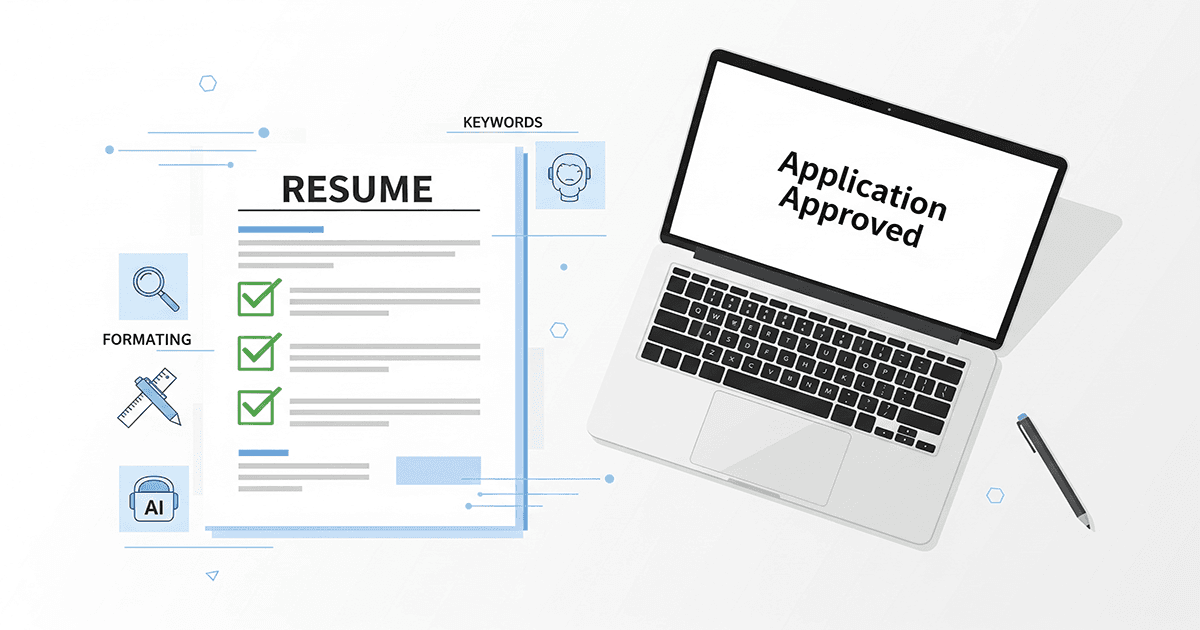
AI Resume Builder
How to Make an ATS-Friendly Resume [A Complete 2025 Guide]
AI Resume Builder
How to List Volunteer Experience on a Resume to Impress Employers
Resume Writing
How to Make a Resume with No Experience – Easy Guide
AI Resume Builder
How to List Academic and Personal Projects on Resume (Proven Formats)
Resume Mistakes
7 Common Resume Mistakes You Must Avoid in 2025
AI Resume Builder
How to Find the Best Keywords for a Resume: A Guide to Beating ATS
Resume Writing
How to Write a Resume That Gets You Hired in 2025
AI Resume Builder
AI Resume Builder Free: Your Guide to Top Tools

AI Resume Builder
AI Resume Builder: Matching Your Resume to Job Descriptions
AI Resume Builder
What Are The Best AI Resume Builders? Your 2024 Guide
AI Resume Builder
AI Resume Builder Reddit: Top Recommendations & Tips

AI Resume Builder