Published in Resume Writing
How to Resume Writing: Your Strategic Guide to Getting Hired
Craft a compelling resume that stands out to recruiters and beats Applicant Tracking Systems (ATS) for entry-level roles.
PE
By Placed Editorial
12 min read
Learning how to resume writing effectively is your first critical step toward landing a job. A well-crafted resume is more than just a document; it's your personal marketing tool, designed to quickly communicate your value and secure an interview. For entry-level professionals, understanding the strategic approach to resume building can make all the difference in a competitive job market.
Resume not getting shortlisted? Optimize your resume: join early access →
Understanding the Modern Resume: More Than Just a Document

A modern resume is a strategic marketing tool, not just a chronological list of past roles. Its primary goal is to quickly communicate your value proposition to a hiring manager, demonstrate alignment with the job's requirements, and pass Applicant Tracking Systems (ATS), ultimately securing an interview.
In today's job market, recruiters and hiring managers often spend only seconds on an initial resume screen. They're not looking for your life story; they're looking for immediate answers to two questions: Can this person do the job? And will they fit into our team? Your resume needs to answer these questions concisely and compellingly, acting as a direct advertisement for your skills and potential.
The vast majority of large companies use Applicant Tracking Systems (ATS) to filter applications before a human ever sees them. These systems scan for keywords, specific formatting, and overall relevance to the job description. If your resume isn't optimized for ATS, it might be rejected automatically, regardless of your qualifications. Think of your resume as a marketing document, strategically designed to highlight your unique selling points for a specific role, rather than a generic biography.
Choosing the Right Resume Format for Your Career Stage
Selecting the appropriate resume format—chronological, functional, or combination—is crucial for entry-level professionals. A chronological format is generally preferred, highlighting your work history in reverse order, but a combination format can be effective if you have diverse skills but limited direct experience.
The format you choose dictates how your experience and skills are presented, directly influencing a recruiter's first impression. For most entry-level roles, a reverse-chronological resume is the industry standard. It clearly lists your work history, internships, and academic projects, starting with the most recent, which is what hiring managers typically expect to see.
However, if you have limited traditional work experience but a strong set of transferable skills from volunteer work, academic projects, or diverse internships, a combination resume might be more beneficial. This format allows you to prominently feature your skills section at the top, followed by a condensed chronological experience section. Functional resumes, which emphasize skills over dates, are generally less preferred by recruiters as they can obscure your work history.
Resume Format Comparison for Entry-Level Professionals
| Format Type | Best For | Pros for Entry-Level | Cons for Entry-Level |
|---|---|---|---|
| Chronological | Most entry-level roles, internships | Clear career progression, familiar to recruiters, ATS-friendly. | Highlights limited experience or gaps if not managed well. |
| Functional | Career changers, significant employment gaps (less common for entry-level) | Emphasizes transferable skills, hides lack of direct experience. | Often viewed with suspicion by recruiters, less ATS-friendly. |
| Combination | Entry-level with diverse projects/skills but limited direct jobs | Highlights strong skills first, then shows relevant experience. | Can be longer, requires careful balance to avoid redundancy. |
Regardless of the format, readability and a clean design are paramount. Use clear headings, consistent formatting, and plenty of white space. Avoid overly decorative fonts or complex layouts that can confuse ATS or busy hiring managers.
Crafting a Compelling Professional Summary (Not an Objective!)
A professional summary is a concise, 2-4 sentence paragraph at the top of your resume that highlights your key skills, experiences, and career aspirations, tailored to the specific job. Unlike an outdated objective statement, it immediately tells the hiring manager what value you bring and why you're a good fit.
Many entry-level professionals mistakenly include an objective statement, which focuses on what you want from the job. A professional summary, however, pivots to what you can offer the employer. It’s your elevator pitch, designed to grab the hiring manager's attention and compel them to read further.
To write a powerful summary, identify the core requirements of the job description and weave in your most relevant skills, experiences (even academic or volunteer), and career goals that align with the company's needs. This section should serve as a quick preview of your entire resume, demonstrating your immediate value.
🧠 Expert Insight: Hiring managers prefer resumes that are tailored to the specific job description. Your professional summary is the first place to demonstrate this alignment, showing you understand what they need. [LinkedIn]
✅ Best Practice: Professional Summary Examples for Entry-Level Roles
- Generic Objective (Avoid): "Seeking an entry-level marketing position to utilize my communication skills and grow professionally."
- Compelling Summary (Use): "Highly motivated recent marketing graduate with a proven ability to analyze market trends and develop engaging social media content. Eager to apply strong communication and analytical skills to drive digital marketing campaigns and contribute to [Company Name]'s growth objectives."
- Another Example: "Detail-oriented Computer Science graduate with hands-on experience in Python and Java development through academic projects. Seeking to leverage problem-solving skills and a passion for [specific technology/field] to contribute to innovative software solutions at [Company Name]."
Showcasing Your Experience: Beyond Just Job Duties
Your experience section should focus on quantifiable achievements and impact, not just a list of responsibilities. Use strong action verbs and the STAR method (Situation, Task, Action, Result) to describe how you contributed value in previous roles, internships, or academic projects, even with limited professional experience.
Instead of merely listing what you did, explain the outcome of your actions. Recruiters want to see how you made a difference. For example, don't just say "Responsible for customer service." Instead, transform it into an achievement: "Resolved 50+ customer inquiries daily, improving customer satisfaction scores by 15% within three months." This shift from duties to quantifiable achievements makes your experience compelling.
Even with limited professional experience, you can highlight internships, volunteer work, academic projects, and relevant extracurricular activities. Frame these experiences using the same achievement-oriented language. Consider a student project where you developed a new system: focus on the problem you solved, the technologies you used, and the results achieved.
🚀 Pro Tip: Using the STAR Method for Impactful Bullet Points
- Situation: Briefly describe the context or challenge.
- Task: Explain your specific role or responsibility.
- Action: Detail the steps you took to address the situation.
- Result: Quantify the positive outcome or impact of your actions.
Before: "Managed social media accounts."
After (STAR applied): "Managed social media content across Instagram and Facebook for a student organization (Situation), increasing follower engagement by 25% over one semester (Result) by implementing a new content calendar and interactive story campaigns (Action)."
Optimizing Your Skills Section for ATS and Hiring Managers
Your skills section should be a strategic blend of hard and soft skills, carefully chosen to match the job description and optimized for Applicant Tracking Systems (ATS). Categorize skills clearly and consider including proficiency levels where appropriate, ensuring relevance to the roles you're targeting.
To beat the ATS and impress hiring managers, your skills section must be relevant and well-organized. Identify hard skills like specific software (e.g., Microsoft Excel, Adobe Creative Suite), programming languages (e.g., Python, SQL), or foreign languages. These are measurable abilities directly applicable to the job. Equally important are soft skills such as communication, teamwork, problem-solving, and adaptability. While harder to quantify, they are crucial for workplace success.
Integrate keywords directly from the job description into your skills section. If the job asks for "data analysis" and "project management," make sure those exact phrases appear. Structure your skills section logically, perhaps with sub-categories like "Technical Skills," "Language Skills," and "Interpersonal Skills." You can also use Placed's AI Resume Review tool to ensure your skills are optimized for ATS compatibility.
📋 Checklist: Building an ATS-Friendly Skills Section
- ✅ Review job descriptions for recurring keywords and phrases.
- ✅ List specific software, tools, and programming languages you know.
- ✅ Include relevant soft skills, especially those mentioned in job postings.
- ✅ Group similar skills (e.g., "Marketing Tools," "Data Analysis Software").
- ✅ Be honest about your proficiency level; don't inflate your abilities.
- ✅ Avoid acronyms unless universally understood in your industry.
The Education Section: Making the Most of Your Academic Background

For entry-level professionals, your education section is a critical component, often placed higher on the resume. Include your degree, major, institution, graduation date, and relevant academic achievements like GPA (if high), honors, and significant coursework or projects that align with your career goals.
As an entry-level candidate, your academic background is a primary indicator of your potential and foundational knowledge. List your highest degree first, followed by the institution name and location, and your graduation date (or expected date). If your GPA is 3.5 or higher, include it to showcase academic excellence. Similarly, mention any honors, scholarships, or dean's list achievements.
Don't underestimate the value of relevant coursework, especially if it directly relates to the job requirements. For example, if applying for a data analyst role, highlight courses in statistics, machine learning, or database management. Furthermore, significant academic projects, capstone projects, or even relevant extracurricular activities can demonstrate practical application of your skills and initiative, bridging the gap if you have limited traditional work experience.
If you have an incomplete degree or are currently pursuing studies, clearly state your progress (e.g., "Currently pursuing Bachelor of Science in...") and expected completion date. This transparency is key.
Final Polish: Proofreading, Tailoring, and ATS Checks
Before submitting, meticulously proofread your resume for any errors, tailor it specifically to each job application, and run it through an ATS checker. These final steps are crucial to ensure your resume is professional, relevant, and has the best chance of getting seen by a hiring manager.
The critical importance of proofreading cannot be overstated. A single typo or grammatical error can signal a lack of attention to detail and professionalism, leading to immediate rejection. Read your resume backward, read it aloud, and ask a trusted friend or mentor to review it. Fresh eyes often catch mistakes you've overlooked.
Beyond proofreading, tailoring your resume to each job description is perhaps the most impactful step. Every job is unique, and your resume should reflect that. This means adjusting keywords, rephrasing bullet points to align with job responsibilities, and sometimes even reorganizing sections to prioritize relevant experience. This level of customization significantly increases your chances of passing ATS and catching a hiring manager's eye. Using an AI resume review tool can help you identify gaps in tailoring and ATS optimization.
📋 Checklist: Your Pre-Submission Final Review
- ✅ Have you proofread for all typos and grammatical errors?
- ✅ Does your resume directly address the specific job description?
- ✅ Have you included relevant keywords from the job posting?
- ✅ Is your resume saved as a PDF (unless otherwise specified) to preserve formatting?
- ✅ Is the length appropriate (typically one page for entry-level)?
- ✅ Have you used strong action verbs throughout your experience section?
- ✅ Does your contact information include a professional email and LinkedIn profile?
Remember that your resume often works in tandem with a cover letter. While your resume provides the facts, your cover letter offers an opportunity to tell a more detailed story about your motivation and specific fit for the role.
🎯 Key Takeaways: Your Action Plan for Resume Success
To write a resume that truly stands out, focus on tailoring it to each role, quantifying your achievements, optimizing for ATS, and meticulously proofreading. Remember, your resume is a dynamic tool that evolves with your career, so continuous refinement is key to unlocking new opportunities.
Start by identifying your target roles and understanding what skills and experiences those industries value most. Don't be afraid to leverage academic projects, volunteer work, and even part-time jobs to demonstrate transferable skills. Continuously review and update your resume as you gain new experiences and skills. For personalized guidance and to ensure your resume is top-notch, consider connecting with a career coach who can provide expert feedback and strategic advice.
Frequently Asked Questions
How long should an entry-level resume be?
For entry-level professionals, a one-page resume is generally ideal. Recruiters and hiring managers spend limited time on initial reviews, so a concise document that highlights your most relevant qualifications and achievements is most effective. Focus on impact over length, ensuring every piece of information earns its place.
What if I have no work experience for my resume?
If you have no traditional work experience, focus on showcasing transferable skills gained from academic projects, volunteer work, internships, extracurricular activities, and even relevant coursework. Emphasize achievements and results from these experiences, using strong action verbs to describe your contributions and learning.
Should I include a photo on my resume?
In most Western countries, particularly the US, it is generally advised not to include a photo on your resume. This practice can introduce unconscious bias and is not standard. Focus on your qualifications and professional presentation of your skills and experience rather than your appearance.
What are action verbs and why are they important?
Action verbs are strong, descriptive verbs that start your bullet points and convey impact and accomplishment (e.g., 'managed,' 'developed,' 'analyzed,' 'implemented'). They make your resume more dynamic and engaging, helping recruiters quickly understand your contributions and the results you achieved, rather than just duties.
How do I make my resume ATS-friendly?
To make your resume ATS-friendly, use standard fonts, clean formatting, and incorporate keywords directly from the job description. Avoid graphics, tables for key information, or complex headers/footers that ATS might struggle to parse. Ensure your skills section is clear and uses common terminology.
Is it better to submit a resume as a PDF or Word document?
Generally, it's best to submit your resume as a PDF, unless the job application specifically requests a Word document. A PDF preserves your formatting across different devices and systems, ensuring your resume appears exactly as you designed it. Word documents can sometimes shift formatting unexpectedly.
Should I include hobbies and interests on my resume?
For entry-level professionals, including hobbies and interests is typically not recommended unless they are directly relevant to the job or demonstrate highly desirable soft skills (e.g., leadership in a sports team, community involvement). Your resume space is valuable, so prioritize professional and academic achievements.
Resume not getting shortlisted? Optimize your resume: join early access →
Related Articles
AI Resume Builder
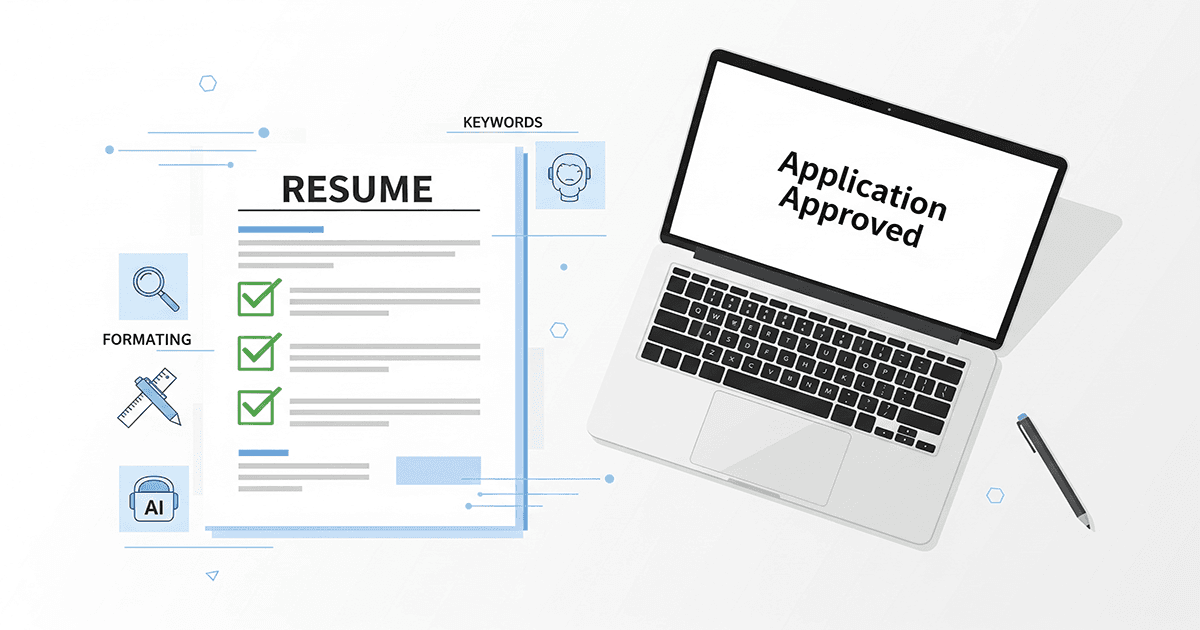
How to Make an ATS-Friendly Resume [A Complete 2025 Guide]

Resume Mistakes
7 Common Resume Mistakes You Must Avoid in 2025
AI Resume Builder
AI Resume Builder - Make Your Professional Resume with One Click
AI Resume Builder
How to List Volunteer Experience on a Resume to Impress Employers
Resume Writing
How to Make a Resume with No Experience – Easy Guide

AI Resume Builder
How to List Academic and Personal Projects on Resume (Proven Formats)

AI Resume Builder
How to Find the Best Keywords for a Resume: A Guide to Beating ATS
Resume Writing
How to Write a Resume That Gets You Hired in 2025
Resume Writing
Resume Storytelling: Crafting Narratives That Get You Hired

Resume Writing
Resume Writing Tips: Land Your Dream Job
Resume Writing