Published in Job Tips
How to Get a Job Interview: Your Pre-Interview Playbook
Unlock the secrets to moving past application screens and into the interview room, even with limited experience.
PE
By Placed Editorial
10 min read
Securing a job interview can feel like navigating a complex maze, especially for entry-level professionals. Many job seekers apply to countless positions only to hear nothing back, leading to frustration and self-doubt. This guide provides actionable career coach strategies and AI resume review insights to significantly increase your chances of getting a job interview, focusing on what happens *before* you even speak to a hiring manager. You'll learn how to optimize your application materials, leverage your network, and understand the modern recruitment process from the inside out.
Not sure what’s holding your search back? Take the 60-second quiz and get your guide →
Why Aren't You Getting Interviews? Understanding the Modern Hiring Funnel
Many job seekers struggle to get interviews because they don't understand the multi-stage hiring process, from Applicant Tracking Systems (ATS) to recruiter screening. Your application needs to pass automated filters first, then quickly impress a human reviewer who spends mere seconds on a resume. Ignoring these stages means your perfect qualifications might never be seen.
When you submit an application, it embarks on a journey that few candidates fully grasp. First, it's often filtered by an Applicant Tracking System (ATS), which scans for keywords and formatting. If it passes, it moves to a recruiter, who typically spends only seconds on a first pass of a resume before deciding to move forward or reject it.
Understanding this funnel is crucial. Recruiters are looking for specific signals of fit and potential. Common reasons applications are rejected early include generic resumes, lack of relevant keywords, poor formatting, or a failure to highlight achievements that align with the job description. Your goal is to make it easy for both the robot and the human to see your value quickly.
Mastering the ATS: Get Your Resume Past the Robots

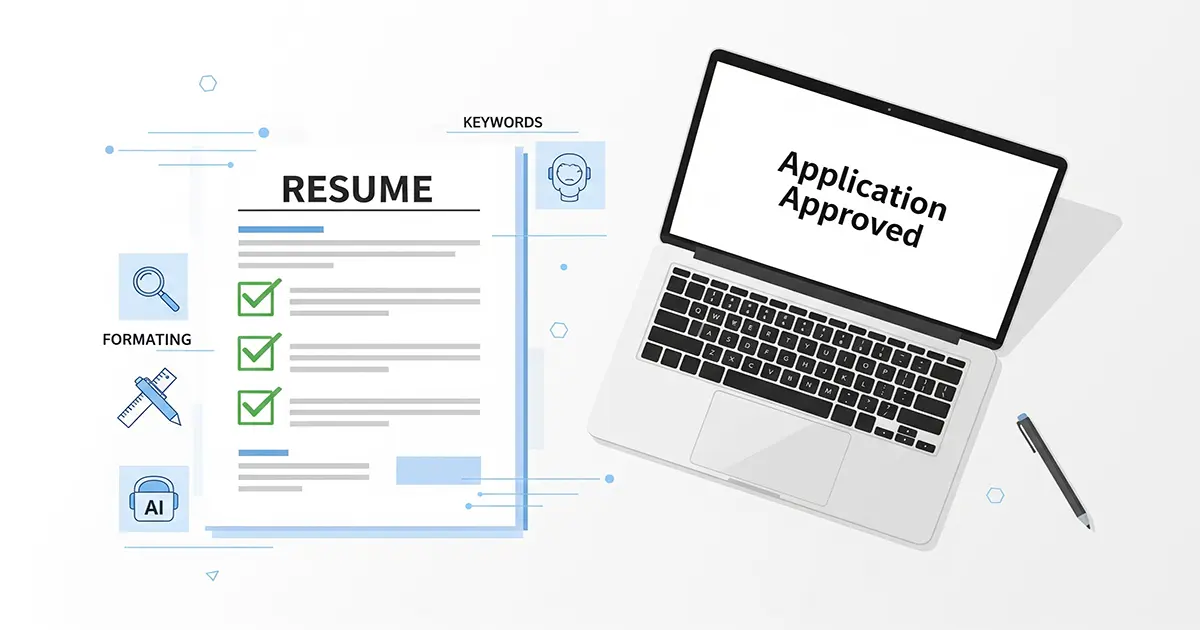
Applicant Tracking Systems (ATS) are software programs that scan, sort, and rank resumes based on keywords and formatting, acting as the first gatekeeper. To get past them, your resume must be clean, keyword-rich, and formatted simply, ensuring the system can parse your information correctly and match it to the job description's requirements.
Companies use ATS to manage the sheer volume of applications they receive, especially for popular entry-level roles. It's designed to filter out unqualified candidates efficiently. The key to success is creating an ATS-friendly resume that uses standard headings, clear fonts, and avoids complex graphics or tables that can confuse the system.
📌 Important: Identifying and Incorporating Keywords
The most critical step is to identify keywords directly from the job description. Look for specific skills, software, certifications, and responsibilities mentioned repeatedly. Weave these exact phrases naturally into your resume's experience, skills, and summary sections. Don't just list them; integrate them into bullet points describing your achievements.
📊 Candidates who optimize their resumes for Applicant Tracking Systems (ATS) significantly increase their chances of being seen by a hiring manager. [Jobscan]
⚠️ Common ATS Mistakes to Avoid
- Using fancy fonts or unusual formatting that can't be parsed.
- Embedding critical information in headers, footers, or text boxes.
- Saving your resume as an image-only PDF or a complex template.
- Not including enough keywords relevant to the job description.
- Relying on a generic resume for every application.
Before submitting, test your resume's compatibility. Many online tools can help you check how well your resume matches a job description and suggest improvements. Consider using Placed's AI Resume Review to get instant feedback on your ATS readiness and keyword optimization.
Crafting a Compelling Resume and Cover Letter That Demands an Interview

A compelling resume isn't just a list of duties; it's a strategic marketing document highlighting achievements and quantifiable results tailored to each role. Paired with a personalized cover letter that tells a story and connects your unique value to the company's needs, these documents are your primary tools to persuade a hiring manager to invite you for an interview.
Once your resume passes the ATS, a human recruiter will review it. This is where your resume needs to shine beyond just keywords. Focus on demonstrating your impact and potential. Instead of just listing responsibilities, use action verbs and quantify your achievements whenever possible. For example, instead of "Managed social media," try "Increased social media engagement by 20% over six months through targeted content campaigns."
💡 Tip: Tailoring Your Resume for Each Application
A generic resume rarely stands out. For each application, customize your resume by reordering bullet points, tweaking your summary, and highlighting experiences most relevant to the specific job. This shows the hiring manager that you understand their needs and have taken the time to present yourself as the ideal candidate.
The Power of a Personalized Cover Letter
Many entry-level professionals underestimate the cover letter, viewing it as a formality. However, a strong, personalized cover letter can be your secret weapon. It allows you to tell a story that your resume can't, connect your unique experiences to the company's mission, and explain why you're genuinely interested in *this specific role* at *this specific company*.
Table: When to Use Different Resume Formats
| Format | Best For | Watch Out For |
|---|---|---|
| Chronological | Clear career progression, standard choice for most. | Highlights employment gaps; less ideal for career changers. |
| Functional | Career changers, those with gaps, emphasis on skills. | Can look like you're hiding something; less preferred by recruiters. |
| Combination | Highlights strong skills section while detailing experience. | Can be lengthy; requires careful balance. |
Use Placed's Resume Builder to create an impactful, ATS-friendly resume that highlights your achievements and can be easily tailored for each job application. Remember, your goal is to make the recruiter's decision easy: you are the perfect fit.
Beyond the Application: Proactive Strategies to Land Interviews
Relying solely on online applications is a passive approach; proactive strategies like strategic networking, direct outreach, and optimizing your professional online presence significantly increase your chances of securing interviews. These methods allow you to bypass crowded application pools, gain insider insights, and get referred by someone who can vouch for your potential.
The "hidden job market" refers to jobs that are never publicly advertised. Many positions are filled through internal referrals or professional networks. Tapping into this market requires a proactive approach that goes beyond simply clicking "apply."
🚀 Pro Tip: Strategic Networking
Networking isn't just about collecting business cards; it's about building genuine relationships. Attend industry events, join professional associations, and connect with people in your target companies on LinkedIn. The goal is to learn, gain insights, and potentially discover opportunities before they're widely known.
Leveraging LinkedIn for Direct Outreach and Discoverability
Your LinkedIn profile is your professional storefront. Optimize it with relevant keywords, a compelling summary, and detailed experience that mirrors your resume. Use LinkedIn's search functions to identify recruiters and hiring managers at companies you're interested in. A polite, personalized message expressing your interest and asking for an informational interview can open doors that online applications can't.
- Optimize Your Profile: Fill out every section, use a professional photo, and include a strong headline and summary with keywords.
- Identify Key People: Use LinkedIn's search filters to find recruiters or employees in your desired role/company.
- Craft a Personalized Message: Reference something specific about their company or profile; don't send a generic connection request.
- Request an Informational Interview: Ask for 15-20 minutes to learn about their career path or company culture, not to ask for a job directly.
- Follow Up Thoughtfully: Send a thank-you note and stay in touch periodically.
🧠 Expert Insight: Networking is responsible for a significant percentage of job placements. Building genuine connections can significantly shorten your job search and open doors to opportunities you wouldn't find otherwise. [LinkedIn]
Getting Referrals: Your Express Pass
A referral from a current employee can dramatically increase your chances of getting an interview. It signals to the hiring manager that someone within their organization vouches for you. When networking, if you build a genuine connection, you can politely ask if they'd be willing to refer you for a suitable opening.
Preparing for Success: What to Do Once the Interview is Scheduled
Once you've secured an interview, thorough preparation is crucial to convert the opportunity into a job offer. This involves researching the company and role deeply, understanding common interview question types, practicing your answers, and preparing insightful questions to ask the interviewer, all of which demonstrate your genuine interest and readiness.
Getting the interview is half the battle; performing well is the next critical step. Your preparation should be comprehensive, leaving no stone unturned. Remember, an interview is a two-way street—you're also evaluating if the company is a good fit for you.
📋 Checklist: Essential Interview Preparation Steps
- Research the Company: Understand their mission, values, recent news, and products/services. Look at their "About Us" page, press releases, and social media.
- Analyze the Job Description: Break down the key responsibilities and required skills. Think about how your experience aligns with each point.
- Understand Interview Formats: Is it a phone screen, video call, or in-person? Prepare for technical requirements (e.g., stable internet, quiet background) and appropriate attire.
- Practice Common Questions: Prepare answers for questions like "Tell me about yourself," "Why are you interested in this role?" and "What are your strengths/weaknesses?"
- Master the STAR Method: Use this structure (Situation, Task, Action, Result) to answer behavioral questions effectively.
- Prepare Your Own Questions: Have 3-5 thoughtful questions ready to ask the interviewer about the role, team, or company culture. This shows engagement.
- Confirm Logistics: Double-check the time, date, location, and interviewer's name.
Thorough preparation not only boosts your confidence but also demonstrates your professionalism and genuine interest. Placed's interview preparation resources can help you refine your answers and practice common interview scenarios, ensuring you're ready for anything.
🎯 Key Takeaways: Your Action Plan to Get More Job Interviews
To consistently secure job interviews, adopt a multi-faceted approach: master ATS optimization, craft tailored and achievement-focused application materials, actively network, and thoroughly prepare for every interaction. Remember, getting an interview is a strategic process that rewards persistence and a deep understanding of the hiring landscape.
- Always tailor your resume and cover letter for each specific job.
- Prioritize ATS optimization to ensure your application gets seen.
- Actively build and leverage your professional network, especially on LinkedIn.
- Quantify your achievements on your resume to demonstrate impact.
- Prepare thoroughly for every interview opportunity, from research to questions.
Frequently Asked Questions
How do I get a job interview with no experience?
When you have limited experience, focus on highlighting transferable skills from academic projects, volunteer work, or internships. Emphasize your eagerness to learn, relevant coursework, and any quantifiable achievements. A strong, tailored cover letter explaining your passion for the role and company can also make a significant difference.
Is it worth writing a cover letter for every job application?
Yes, absolutely. While some companies state they don't require them, a personalized cover letter demonstrates genuine interest and allows you to explain your fit beyond what a resume can convey. It's an opportunity to tell your story and make a direct connection, significantly increasing your chances, especially in competitive markets.
How long should I wait to follow up after applying for a job?
Generally, it's appropriate to wait about one to two weeks after the application deadline or your submission date before sending a polite follow-up email. If the job posting provides a timeline, adhere to that. A single, professional follow-up shows your continued interest without being overly persistent.
What's the best way to stand out among many applicants?
To stand out, go beyond simply applying online. Tailor your resume and cover letter meticulously for each role, highlighting specific achievements and keywords. Leverage networking to get an internal referral, and optimize your LinkedIn profile for discoverability. A proactive, multi-channel approach is key.
Are generic online job applications a waste of time?
Generic applications are often less effective because they don't resonate with ATS or human reviewers. While online applications are a necessary part of the job search, combining them with tailored applications, networking, and direct outreach significantly improves your success rate. Treat each application as a strategic submission, not a numbers game.
By implementing these strategies, you'll not only increase your chances of getting a job interview but also build confidence in your job search. Ready to take the next step? Explore Placed's AI Resume Review to ensure your application materials are primed for success.
Ready for your next step? Join the waitlist: take the 60-second quiz →
Related Articles

Job Tips
How to Handle Job Rejection & Stay Motivated in Your Job Search

Job Tips
How to Get Your Dream Job Without Experience – 10 Proven Tips
AI Tools
How to Beat the AI Resume Scanners in 2025: A Step-by-Step Guide

AI Job Search
How to Use AI for Job Search: Resume & Interview Success Guide
Job Tips
Best Job Hunting Tips for Beginners: A Complete Guide
Job Tips