Many job seekers fear their applications vanish into a digital black hole, never seen by human eyes. This fear stems from the widespread use of Applicant Tracking Systems (ATS), which often incorporate AI resume scanners. Yes, AI resume scanners are highly effective at filtering resumes based on predefined criteria, keywords, and relevance to job descriptions. They significantly streamline the initial screening process for recruiters by identifying top candidates and eliminating unqualified ones, though their effectiveness relies heavily on proper resume optimization.
Do AI Resume Scanners Actually Work? The Truth Behind ATS
Yes, AI resume scanners, often part of Applicant Tracking Systems (ATS), are highly effective at filtering resumes based on predefined criteria, keywords, and relevance to job descriptions. They significantly streamline the initial screening process for recruiters by identifying top candidates and eliminating unqualified ones, though their effectiveness relies heavily on proper resume optimization.
An ATS is a software application that manages the entire recruitment and hiring process. Its primary function is to organize and track candidate information, but its most critical role for job seekers is filtering. Faced with hundreds, sometimes thousands, of applications for a single role, companies rely on ATS to efficiently narrow down the candidate pool to a manageable number for human review. Without ATS, the sheer volume of applications would overwhelm hiring teams, making the hiring process far slower and less efficient.
The evolution of these systems has moved beyond simple keyword matching. While early ATS versions merely checked for keyword density, modern AI in hiring process tools utilize advanced algorithms to understand context, identify semantic relationships, and even assess the quality of experience. This sophistication means that while keyword stuffing was once a crude strategy, today's resume screening software is far more discerning. The goal of these systems is to automate the preliminary screening, ensuring that only the most qualified and relevant candidates reach a recruiter's desk.
How AI Resume Scanners Evaluate Your Application
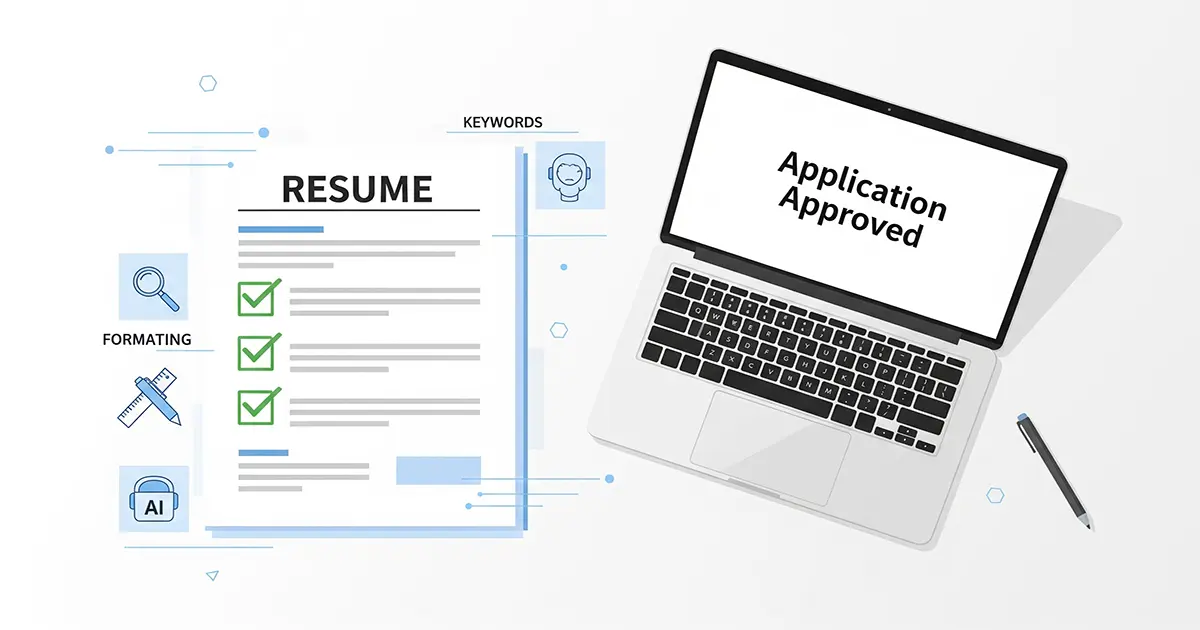
AI resume scanners evaluate applications by parsing resumes for key information, matching keywords to the job description, analyzing formatting for readability, assessing skills and experience against requirements, and sometimes even evaluating tone and consistency. They score candidates based on relevance, helping recruiters identify the most promising profiles.

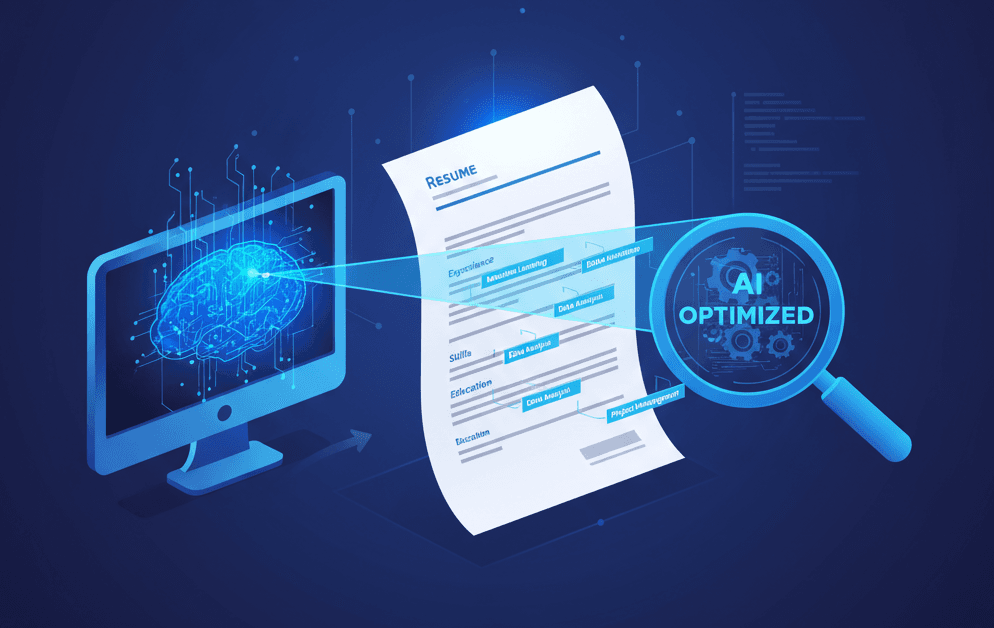
The first step for any AI scanner is resume parsing. This involves extracting structured data—like your name, contact information, job titles, company names, dates of employment, and skills—from an unstructured document like a resume. The system then populates these data points into standardized fields within the ATS database. If your resume uses complex layouts or non-standard fonts, the parsing process can fail, leading to critical information being missed.
Next, the AI performs keyword matching. This isn't just about finding exact words from the job description anymore. Modern systems use semantic matching to understand related terms and concepts. For example, if a job description asks for 'project management software experience,' the ATS might recognize 'Jira,' 'Asana,' or 'Trello' as relevant keywords. The goal is to identify candidates whose profiles most closely align with the stated requirements. Jobscan states that using the exact wording from the job post (term match) increases the chances of being tracked by ATS.
Beyond keywords, AI assesses your skills and experience. It identifies relevant abilities by analyzing your work history for specific responsibilities and achievements. The system prioritizes quantifiable results, looking for metrics and numbers that demonstrate impact. It also checks for the duration of roles and the progression of your career to gauge experience levels. Remember, your cover letter also undergoes scrutiny; ensure it's an ATS-friendly cover letter that complements your resume.
Finally, formatting and readability are crucial. While AI doesn't care about aesthetic appeal, it requires a clean, consistent format to parse information accurately. Simple, linear layouts with standard headings are preferred. Complex graphics, text boxes, or unusual fonts can confuse the parsing engine, leading to an incomplete or inaccurate profile being created in the ATS. This is why simplicity is always better for ATS compatibility.
Evaluation Criterion | What the AI Looks For |
|---|
The Limitations of AI Resume Scanners: What They Miss
While efficient, AI resume scanners have limitations, including difficulty interpreting complex formatting, missing context or transferable skills not explicitly stated, struggling with non-traditional career paths, and lacking the nuanced understanding of human judgment. They can inadvertently filter out highly qualified candidates if resumes aren't perfectly optimized.

One significant limitation lies in their struggle with complex formatting and graphics. While humans appreciate visually appealing resumes, AI scanners prioritize readability by machines. If your resume includes custom fonts embedded in images, intricate tables, or heavy graphical elements, the ATS might not parse the text correctly, rendering your experience invisible. This is a common mistake job seekers make, prioritizing design over ATS compatibility.
AI also suffers from a lack of contextual understanding. It can miss implied skills, transferable abilities from seemingly unrelated roles, or unique experiences that don't fit into standard categories. For instance, a candidate with extensive volunteer leadership might possess strong project management skills, but if not explicitly stated with keywords, the AI might overlook it. It also struggles with non-linear career paths or career changers, often favoring traditional, straightforward progressions.
Another concern is bias in algorithms. AI systems learn from historical data, which can inadvertently perpetuate existing biases present in past hiring decisions. This means if a company historically hired from specific demographics or universities, the AI might implicitly favor candidates with similar backgrounds, potentially discriminating against diverse talent. This is an ongoing challenge in AI recruitment technology.
Finally, AI cannot effectively assess soft skills or cultural fit. While some advanced systems attempt sentiment analysis, they cannot genuinely understand leadership potential, teamwork ability, or an individual's personality. These qualities, crucial for success in many roles, still require human judgment. Furthermore, poorly written or vague job descriptions can severely impact AI accuracy, as the system has less precise criteria to match against.
⚠️ Warning: Overly creative or graphically-rich resumes are often penalized by AI scanners. Prioritize clean, standard formatting for maximum ATS compatibility.
Can a Human Override an AI Scanner's Decision?
Yes, a human can and often does override an AI scanner's decision. AI tools are designed to assist, not replace, human recruiters. While AI provides an initial filter, human recruiters review the top-ranked candidates and can manually review other applications, especially for niche roles or if the AI's results seem insufficient.
It's crucial to understand that AI is a tool for recruiters, not a final decision-maker. Recruiters use ATS to manage the initial influx of applications, but the ultimate hiring decision rests with a human. The AI's role is to present a refined list of candidates, saving recruiters valuable time. However, this doesn't mean the AI's word is final. Recruiters often manually review candidates who might not have scored highest but possess unique skills or experiences that the AI overlooked.
Human intervention is common in several scenarios. For instance, if the AI produces a very small candidate pool, or if the role is highly specialized, a recruiter might expand their search beyond the top-ranked profiles. Companies committed to diversity and inclusion initiatives also often implement human oversight to ensure qualified candidates from underrepresented groups aren't inadvertently filtered out by biased algorithms. This emphasizes the importance of still appealing to human readers once past the ATS.
The human element brings judgment and nuance that AI lacks. A recruiter can interpret transferable skills, understand career transitions, and assess potential cultural fit in a way no machine can. Therefore, while beating AI resume scanners is critical, your resume must also be compelling enough to impress the human who eventually reads it. The goal is to pass the machine, then shine for the person.
How to Optimize Your Resume to Pass AI Scanners and Impress Recruiters
To optimize your resume for AI scanners, use clear, simple formatting, incorporate keywords directly from the job description, quantify achievements with data, and ensure all relevant skills and experience are explicitly stated. Simultaneously, make it compelling and easy for human recruiters to read, focusing on impact and clarity.
Use an ATS-Friendly Format: Opt for a clean, minimalist design. Standard fonts like Arial, Calibri, or Times New Roman are best. Use clear, conventional section headers (e.g., 'Professional Experience,' 'Education,' 'Skills,' 'Summary'). Avoid graphics, images, complex tables, and text boxes, as these can confuse resume parsing technology. Bullet points are excellent for readability by both AI and humans.
Strategic Keyword Integration: Analyze the job description for specific keywords, phrases, and skills. Incorporate these terms naturally throughout your resume, especially in your professional summary, experience bullet points, and skills section. Don't just list them; embed them in context. Jobscan notes that ATS systems are tuned to expect specific keywords and phrases. Before applying, always run your resume through an AI resume review tool to catch any parsing issues or missing keywords.
What Data Do AI Scanners Look For in Resumes?
AI scanners primarily look for specific data points such as contact information, work experience (job titles, companies, dates, responsibilities), education (degrees, institutions, dates), skills (technical and soft), and keywords relevant to the job description. They also analyze formatting, sections, and the overall structure to ensure readability and relevance.
Contact Information: Name, professional email address, phone number, and a clean LinkedIn profile URL. Ensure this is prominently placed and easily identifiable. A strong, keyword-rich LinkedIn profile complements your resume and can serve as a valuable cross-reference for recruiters, emphasizing the importance of LinkedIn profile optimization.
Work Experience: This section is heavily scrutinized. AI looks for clear job titles, company names, start and end dates, and bulleted achievements under each role. It prioritizes roles directly relevant to the target job and seeks quantifiable results. Use strong action verbs at the start of each bullet point.
Education: Degrees obtained, major/minor, institution names, and graduation dates. For mid-level professionals, this section is usually less critical than experience but must be present and correctly formatted.
Understanding these data points allows you to optimize your resume for AI scanners proactively. By ensuring clarity, consistency, and keyword saturation, you significantly increase your chances of passing the initial digital gatekeepers and getting your application seen by a human recruiter.
The landscape of job applications has undeniably been transformed by AI. While the idea of a machine judging your qualifications can be daunting, understanding how AI resume scanners actually work empowers you to navigate this system effectively. The key isn't to trick the AI, but to communicate your value clearly and concisely, both to the machine and the human. By focusing on ATS resume optimization, strategic keyword use, and a clear, quantifiable presentation of your experience, you can significantly improve your chances of success. Your next step should be to critically review your current resume against a target job description, making the necessary adjustments to enhance its ATS compatibility. Consider using Placed's AI Resume Review to get an instant analysis and actionable feedback to ensure your resume is ready to impress.
🎯 Key Takeaways
AI resume scanners are highly effective at filtering resumes, but they have limitations.
Optimizing your resume for ATS involves clear formatting and strategic keyword use.
Human recruiters can and do override AI decisions, especially for nuanced roles.
AI primarily looks for structured data like job titles, skills, and quantifiable achievements.
Understanding AI's limitations helps you craft a resume that appeals to both machines and humans.
Tailoring your resume for each application is crucial to pass AI screening.
Frequently Asked Questions
How can AI help with job applications?
AI can significantly streamline the job application process by helping job seekers identify relevant roles, optimize their resumes and cover letters for specific job descriptions, and even practice for interviews. Tools powered by AI can analyze job postings to suggest keywords, rephrase bullet points for impact, and check for ATS compatibility, saving time and increasing the likelihood of passing initial screening stages. This allows applicants to focus on crafting more personalized and impactful applications.
What are the best AI tools for job searching?
The best AI tools for job searching often fall into categories such as resume optimization, cover letter generation, interview preparation, and job matching. For resume optimization, tools that scan against job descriptions are invaluable. For cover letters, AI generators that can draft personalized content based on your resume and the job posting are highly effective. Interview prep tools that simulate common questions and provide feedback on your answers are also gaining traction. Placed offers a suite of tools designed to assist with these critical aspects of your job search.
How do I use AI to write a resume?
To use AI to write a resume, start by inputting your existing work history, skills, and educational background into an AI-powered resume builder or optimization tool. These tools can then analyze job descriptions you're interested in, suggest relevant keywords, and rephrase bullet points to emphasize quantifiable achievements and impact. They can also help structure your resume in an ATS-friendly format, ensuring it's easily parsed by screening software. The key is to provide the AI with sufficient raw data about your experience.
Is it good to use AI for cover letter?
Yes, using AI for cover letters can be highly beneficial, especially for generating a strong first draft and ensuring it aligns with the job description. AI tools can analyze the job posting and your resume to craft a personalized cover letter that highlights your most relevant skills and experiences. This saves time and helps ensure your letter addresses the employer's specific needs. However, always review and personalize the AI-generated content to add your unique voice and ensure authenticity. ATS systems are tuned to expect specific keywords, structure, and tone in cover letters, especially in the US (Jobscan).
What are common resume mistakes to avoid?
Common resume mistakes include using overly complex formatting (e.g., graphics, text boxes) that ATS cannot parse, failing to tailor the resume to each specific job description, not quantifying achievements with metrics, and relying on generic buzzwords instead of specific keywords. Other errors include typos, grammatical mistakes, and including irrelevant personal information. These errors can lead to immediate rejection by both AI scanners and human recruiters.
How do I optimize my resume for ATS?
To optimize your resume for ATS, prioritize clear, simple formatting with standard fonts and section headings. Integrate keywords directly from the job description into your experience bullet points and skills section. Use common job titles and spell out acronyms. Quantify your achievements with numbers and metrics whenever possible. Finally, save your resume as a standard PDF or Word document (unless otherwise specified) to ensure maximum compatibility. Using the exact wording from the job post (term match) increases the chances of being tracked by ATS (Jobscan).
What keywords should I use in my resume?
The keywords you should use in your resume are primarily those found in the job description itself. Analyze the job posting for specific skills, technologies, certifications, and responsibilities. Incorporate these terms naturally into your professional summary, work experience bullet points, and skills section. Beyond job-specific terms, include industry-standard keywords and action verbs relevant to your profession. Remember, ATS software filters resumes before recruiters see them, looking for specific keywords and information (Jobscan).
How do I make my resume ATS friendly in 2025?
Making your resume ATS friendly in 2025 means focusing on clean, minimalist design, strategic keyword integration, and clear section demarcation. Use standard section headers like 'Experience,' 'Education,' and 'Skills.' Avoid graphics, elaborate fonts, and intricate layouts that can confuse parsing software. Ensure your contact information is easily identifiable. Continuously update your skills section with relevant, in-demand technical and soft skills, and always tailor the content to match the specific job description you're applying for, even if it requires minor rephrasing.
Can AI write a good cover letter from a job description?
Yes, AI can write a good cover letter from a job description, especially as a starting point. Advanced AI tools can analyze the job requirements and your resume to generate a customized letter that highlights your most relevant qualifications. This can significantly reduce the time and effort involved in drafting multiple cover letters. However, for the best results, always review, refine, and personalize the AI-generated content to ensure it reflects your authentic voice and addresses any specific nuances of the role or company that AI might miss.
What are the benefits of using an AI resume builder?
The benefits of using an AI resume builder include increased efficiency, improved ATS compatibility, and enhanced content quality. These tools can help you quickly create a professional-looking resume, suggest relevant keywords based on job descriptions, and ensure your resume follows an ATS-friendly format. They can also help you articulate your achievements more effectively by suggesting strong action verbs and quantifiable metrics, ultimately increasing your chances of getting past initial screening stages.
How to beat ATS resume?
To beat an ATS resume scanner, focus on aligning your resume content directly with the job description. This means strategically incorporating keywords, using a simple and readable format, and clearly articulating your experience and skills. Ensure your resume has standard section headings, uses common fonts, and avoids complex visual elements. Quantify your achievements to demonstrate impact. Essentially, make it easy for the machine to understand your qualifications, and then for the human to see your value.
AI in recruitment trends?
AI in recruitment trends points towards more sophisticated screening, personalized candidate experiences, and enhanced predictive analytics. AI is moving beyond simple keyword matching to analyze sentiment, identify skill adjacencies, and even predict candidate success. It's also increasingly used in interview scheduling, chatbot interactions for FAQs, and creating more diverse candidate pools by mitigating unconscious bias. While AI streamlines initial stages, the trend also emphasizes maintaining a human touch in later recruitment phases.
Many job seekers fear their applications vanish into a digital black hole, never seen by human eyes. This fear stems from the widespread use of Applicant Tracking Systems (ATS), which often incorporate AI resume scanners. Yes, AI resume scanners are highly effective at filtering resumes based on predefined criteria, keywords, and relevance to job descriptions. They significantly streamline the initial screening process for recruiters by identifying top candidates and eliminating unqualified ones, though their effectiveness relies heavily on proper resume optimization.
Do AI Resume Scanners Actually Work? The Truth Behind ATS
Yes, AI resume scanners, often part of Applicant Tracking Systems (ATS), are highly effective at filtering resumes based on predefined criteria, keywords, and relevance to job descriptions. They significantly streamline the initial screening process for recruiters by identifying top candidates and eliminating unqualified ones, though their effectiveness relies heavily on proper resume optimization.
An ATS is a software application that manages the entire recruitment and hiring process. Its primary function is to organize and track candidate information, but its most critical role for job seekers is filtering. Faced with hundreds, sometimes thousands, of applications for a single role, companies rely on ATS to efficiently narrow down the candidate pool to a manageable number for human review. Without ATS, the sheer volume of applications would overwhelm hiring teams, making the hiring process far slower and less efficient.
The evolution of these systems has moved beyond simple keyword matching. While early ATS versions merely checked for keyword density, modern AI in hiring process tools utilize advanced algorithms to understand context, identify semantic relationships, and even assess the quality of experience. This sophistication means that while keyword stuffing was once a crude strategy, today's resume screening software is far more discerning. The goal of these systems is to automate the preliminary screening, ensuring that only the most qualified and relevant candidates reach a recruiter's desk.
How AI Resume Scanners Evaluate Your Application
AI resume scanners evaluate applications by parsing resumes for key information, matching keywords to the job description, analyzing formatting for readability, assessing skills and experience against requirements, and sometimes even evaluating tone and consistency. They score candidates based on relevance, helping recruiters identify the most promising profiles.
The first step for any AI scanner is resume parsing . This involves extracting structured data—like your name, contact information, job titles, company names, dates of employment, and skills—from an unstructured document like a resume. The system then populates these data points into standardized fields within the ATS database. If your resume uses complex layouts or non-standard fonts, the parsing process can fail, leading to critical information being missed.
Next, the AI performs keyword matching . This isn't just about finding exact words from the job description anymore. Modern systems use semantic matching to understand related terms and concepts. For example, if a job description asks for 'project management software experience,' the ATS might recognize 'Jira,' 'Asana,' or 'Trello' as relevant keywords. The goal is to identify candidates whose profiles most closely align with the stated requirements. Jobscan states that using the exact wording from the job post (term match) increases the chances of being tracked by ATS.
Beyond keywords, AI assesses your skills and experience . It identifies relevant abilities by analyzing your work history for specific responsibilities and achievements. The system prioritizes quantifiable results, looking for metrics and numbers that demonstrate impact. It also checks for the duration of roles and the progression of your career to gauge experience levels. Remember, your cover letter also undergoes scrutiny; ensure it's an ATS-friendly cover letter that complements your resume.
Finally, formatting and readability are crucial. While AI doesn't care about aesthetic appeal, it requires a clean, consistent format to parse information accurately. Simple, linear layouts with standard headings are preferred. Complex graphics, text boxes, or unusual fonts can confuse the parsing engine, leading to an incomplete or inaccurate profile being created in the ATS. This is why simplicity is always better for ATS compatibility.
Evaluation Criterion
What the AI Looks For
Job Seeker Action
magnifying glass over resume with
Keywords
Exact and semantic matches to job description terms; industry-specific jargon.
Integrate job description terms naturally throughout your resume.
Formatting
Standard sections (Experience, Education, Skills), common fonts, clear bullet points, chronological order.
Use a simple, clean, ATS-friendly template; avoid complex graphics or unusual layouts.
Skills
Specific technical skills, software proficiencies, languages, and sometimes soft skills listed explicitly.
Create a dedicated skills section; list both hard and relevant soft skills.
Experience
Job titles, company names, dates, responsibilities, and achievements for each role.
Clearly list job details; use strong action verbs and quantify achievements.
Quantifiable Achievements
Numbers, percentages, and metrics demonstrating impact and results.
Include specific metrics in your bullet points (e.g., 'Increased sales by 15%').
The Limitations of AI Resume Scanners: What They Miss
While efficient, AI resume scanners have limitations, including difficulty interpreting complex formatting, missing context or transferable skills not explicitly stated, struggling with non-traditional career paths, and lacking the nuanced understanding of human judgment. They can inadvertently filter out highly qualified candidates if resumes aren't perfectly optimized.
One significant limitation lies in their struggle with complex formatting and graphics . While humans appreciate visually appealing resumes, AI scanners prioritize readability by machines. If your resume includes custom fonts embedded in images, intricate tables, or heavy graphical elements, the ATS might not parse the text correctly, rendering your experience invisible. This is a common mistake job seekers make, prioritizing design over ATS compatibility.
AI also suffers from a lack of contextual understanding . It can miss implied skills, transferable abilities from seemingly unrelated roles, or unique experiences that don't fit into standard categories. For instance, a candidate with extensive volunteer leadership might possess strong project management skills, but if not explicitly stated with keywords, the AI might overlook it. It also struggles with non-linear career paths or career changers, often favoring traditional, straightforward progressions.
Another concern is bias in algorithms . AI systems learn from historical data, which can inadvertently perpetuate existing biases present in past hiring decisions. This means if a company historically hired from specific demographics or universities, the AI might implicitly favor candidates with similar backgrounds, potentially discriminating against diverse talent. This is an ongoing challenge in AI recruitment technology.
Finally, AI cannot effectively assess soft skills or cultural fit . While some advanced systems attempt sentiment analysis, they cannot genuinely understand leadership potential, teamwork ability, or an individual's personality. These qualities, crucial for success in many roles, still require human judgment. Furthermore, poorly written or vague job descriptions can severely impact AI accuracy, as the system has less precise criteria to match against.
⚠️ Warning: Overly creative or graphically-rich resumes are often penalized by AI scanners. Prioritize clean, standard formatting for maximum ATS compatibility.
Can a Human Override an AI Scanner's Decision?
Yes, a human can and often does override an AI scanner's decision. AI tools are designed to assist, not replace, human recruiters. While AI provides an initial filter, human recruiters review the top-ranked candidates and can manually review other applications, especially for niche roles or if the AI's results seem insufficient.
It's crucial to understand that AI is a tool for recruiters, not a final decision-maker. Recruiters use ATS to manage the initial influx of applications, but the ultimate hiring decision rests with a human. The AI's role is to present a refined list of candidates, saving recruiters valuable time. However, this doesn't mean the AI's word is final. Recruiters often manually review candidates who might not have scored highest but possess unique skills or experiences that the AI overlooked.
Human intervention is common in several scenarios. For instance, if the AI produces a very small candidate pool, or if the role is highly specialized, a recruiter might expand their search beyond the top-ranked profiles. Companies committed to diversity and inclusion initiatives also often implement human oversight to ensure qualified candidates from underrepresented groups aren't inadvertently filtered out by biased algorithms. This emphasizes the importance of still appealing to human readers once past the ATS.
The human element brings judgment and nuance that AI lacks. A recruiter can interpret transferable skills, understand career transitions, and assess potential cultural fit in a way no machine can. Therefore, while beating AI resume scanners is critical, your resume must also be compelling enough to impress the human who eventually reads it. The goal is to pass the machine, then shine for the person.
How to Optimize Your Resume to Pass AI Scanners and Impress Recruiters
To optimize your resume for AI scanners, use clear, simple formatting, incorporate keywords directly from the job description, quantify achievements with data, and ensure all relevant skills and experience are explicitly stated. Simultaneously, make it compelling and easy for human recruiters to read, focusing on impact and clarity.
Use an ATS-Friendly Format : Opt for a clean, minimalist design. Standard fonts like Arial, Calibri, or Times New Roman are best. Use clear, conventional section headers (e.g., 'Professional Experience,' 'Education,' 'Skills,' 'Summary'). Avoid graphics, images, complex tables, and text boxes, as these can confuse resume parsing technology. Bullet points are excellent for readability by both AI and humans.
Strategic Keyword Integration : Analyze the job description for specific keywords, phrases, and skills. Incorporate these terms naturally throughout your resume, especially in your professional summary, experience bullet points, and skills section. Don't just list them; embed them in context. Jobscan notes that ATS systems are tuned to expect specific keywords and phrases. Before applying, always run your resume through an AI resume review tool to catch any parsing issues or missing keywords.
Quantify Achievements with Numbers and Metrics : Instead of saying 'Managed a team,' say 'Managed a team of 5, resulting in a 20% increase in project completion efficiency.' AI scanners are programmed to identify numbers and metrics as indicators of impact and success. This also makes your accomplishments more compelling for human readers.
Tailor Your Resume for Each Application : A generic resume is unlikely to pass AI screening. Customize your resume for every job by aligning it with the specific job description. This isn't about fabricating experience, but about highlighting and rephrasing relevant aspects of your background to match the employer's needs. This is a core job search AI strategy.
Include a Clear Summary/Objective Statement : Start with a concise professional summary that quickly highlights your most relevant skills and experience, incorporating key terms from the job description. This acts as a hook for both the AI and the human reader, quickly establishing your relevance.
Proofread Meticulously : Typos and grammatical errors are red flags for both AI and human recruiters. They indicate a lack of attention to detail. Use grammar checkers, but also have a trusted colleague review your resume before submission. Even a perfect match on keywords won't save a resume riddled with errors.
Save in ATS-Friendly File Formats : Unless specified otherwise, save your resume as a .docx or a standard .pdf. These formats are generally preferred by ATS for accurate parsing. Avoid less common formats or image-based PDFs.
Leverage tools like Placed's resume builder to ensure your resume adheres to these best practices from the start.
What Data Do AI Scanners Look For in Resumes?
AI scanners primarily look for specific data points such as contact information, work experience (job titles, companies, dates, responsibilities), education (degrees, institutions, dates), skills (technical and soft), and keywords relevant to the job description. They also analyze formatting, sections, and the overall structure to ensure readability and relevance.
Contact Information : Name, professional email address, phone number, and a clean LinkedIn profile URL. Ensure this is prominently placed and easily identifiable. A strong, keyword-rich LinkedIn profile complements your resume and can serve as a valuable cross-reference for recruiters, emphasizing the importance of LinkedIn profile optimization .
Work Experience : This section is heavily scrutinized. AI looks for clear job titles, company names, start and end dates, and bulleted achievements under each role. It prioritizes roles directly relevant to the target job and seeks quantifiable results. Use strong action verbs at the start of each bullet point.
Education : Degrees obtained, major/minor, institution names, and graduation dates. For mid-level professionals, this section is usually less critical than experience but must be present and correctly formatted.
Skills Section : A dedicated section for both hard skills (e.g., programming languages, software proficiency, data analysis) and relevant soft skills (e.g., project management, communication, leadership). List skills clearly and use keywords found in the job description. This is where AI resume analysis truly shines.
Keywords : As discussed, AI searches for industry-specific terms, action verbs, and phrases directly from the job description. These are the resume keywords for AI that determine initial match scores. The more relevant keywords you include naturally, the higher your score.
Formatting and Structure : AI checks for standard section headers, consistent bullet points, and a generally chronological order for work experience. It ensures the document is parseable and that information is logically organized, contributing to ATS effectiveness.
Understanding these data points allows you to optimize your resume for AI scanners proactively. By ensuring clarity, consistency, and keyword saturation, you significantly increase your chances of passing the initial digital gatekeepers and getting your application seen by a human recruiter.
The landscape of job applications has undeniably been transformed by AI. While the idea of a machine judging your qualifications can be daunting, understanding how AI resume scanners actually work empowers you to navigate this system effectively. The key isn't to trick the AI, but to communicate your value clearly and concisely, both to the machine and the human. By focusing on ATS resume optimization, strategic keyword use, and a clear, quantifiable presentation of your experience, you can significantly improve your chances of success. Your next step should be to critically review your current resume against a target job description, making the necessary adjustments to enhance its ATS compatibility. Consider using Placed's AI Resume Review to get an instant analysis and actionable feedback to ensure your resume is ready to impress.