Published in Career Tips
Career Tips: Essential Strategies for Entry-Level Professionals
Navigate your early career with expert-backed advice on resumes, networking, and growth.
PE
By Placed Editorial
11 min read
Starting your professional journey can feel like navigating a complex maze. With so many paths and opportunities, knowing which career tips to prioritize is crucial for entry-level professionals. This guide provides actionable, expert-backed strategies to help you build a strong foundation, stand out in a competitive job market, and accelerate your career growth from day one.
Laying the Groundwork: Understanding Your Career Compass
Before diving into job applications, it's crucial for entry-level professionals to define their career values, strengths, and long-term aspirations. This foundational self-assessment acts as your career compass, guiding decisions and ensuring your efforts align with a path that genuinely fulfills you, rather than just chasing any open role.
Many entry-level professionals make the mistake of applying to every open position without understanding their own motivations. Taking time for self-assessment helps you identify roles that truly resonate with your interests and skills, leading to greater job satisfaction and long-term success. For instance, if innovation is a core value, a role in a slow-moving, traditional industry might lead to burnout.
📋 Your Career Compass Checklist
- Identify Your Core Values: What truly matters to you in a workplace (e.g., impact, collaboration, autonomy, work-life balance)?
- Assess Your Strengths: What are you naturally good at, or what skills have you developed through academic projects or volunteer work?
- Pinpoint Your Interests: What topics, industries, or types of problems genuinely excite you?
- Set SMART Career Goals: Define Specific, Measurable, Achievable, Relevant, and Time-bound objectives for your first 1-3 years.
- Research Career Paths: Explore different roles and industries that align with your values and skills to understand potential trajectories.
Understanding your 'why' for career choices empowers you to make intentional decisions, rather than drifting. This clarity not only helps you target appropriate jobs but also allows you to articulate your motivations convincingly in interviews.
Crafting Your Professional Story: Resumes and Cover Letters That Convert

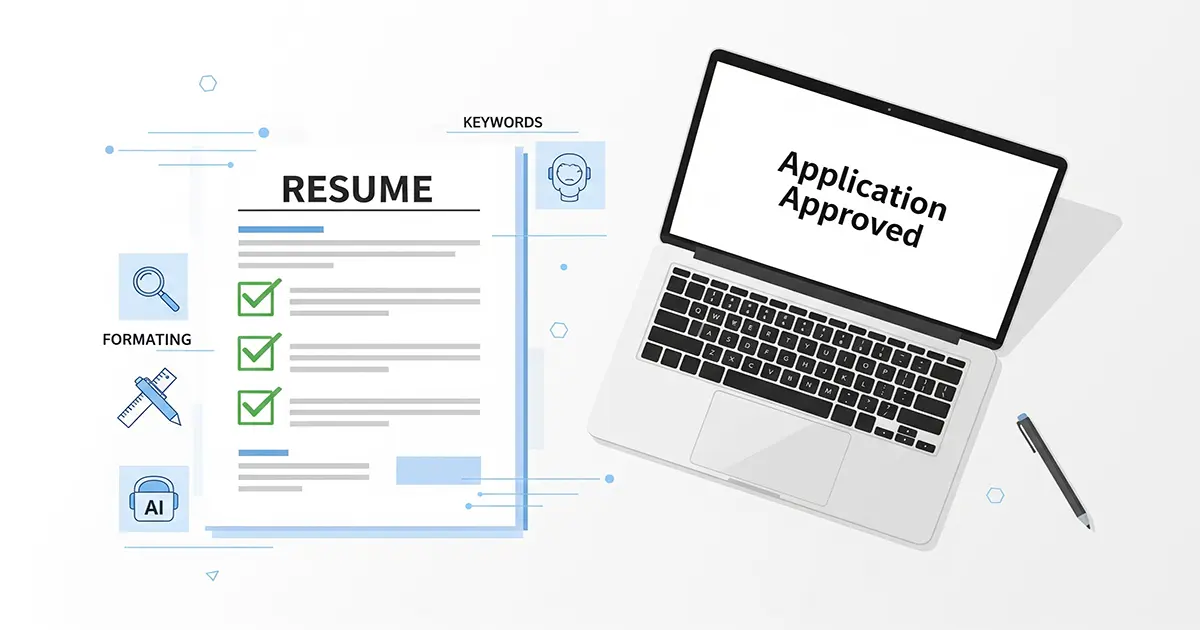
Your resume and cover letter are often the first impression you make on a potential employer. For entry-level professionals, this means showcasing transferable skills, relevant projects, and a clear understanding of the role, rather than just listing past jobs. Tailoring these documents to each application is paramount for passing ATS and capturing recruiter attention.
Many entry-level job seekers wonder why their applications aren't getting traction. The reality is, ATS optimization is crucial; most recruiters spend only seconds on an initial resume review. [Jobscan] Without keywords from the job description, your application might never reach human eyes. This means customizing your resume for every role, highlighting how your academic projects, internships, or volunteer experiences directly align with the job requirements.
⚠️ Common Resume Mistakes to Avoid
- Using a generic resume: One size does not fit all. Tailor content to each job description.
- Focusing on duties, not achievements: Instead of "Managed social media," write "Grew social media engagement by 25% through targeted campaigns."
- Ignoring ATS: Not including keywords from the job description means your resume might be filtered out before a human sees it.
- Typos and grammatical errors: These instantly signal a lack of attention to detail.
- Overly long or cluttered: Keep it concise and easy to read, typically one page for entry-level.
A compelling cover letter complements your resume by telling a story. It's your chance to explain *why* you're passionate about *this specific role* and *this specific company*, connecting your limited experience to their needs. Our resume builder and cover letter tools can guide you in creating documents that truly stand out.
| Resume Section | Entry-Level Focus | Example |
|---|---|---|
| Summary/Objective | Future-oriented, transferable skills, career goals | "Highly motivated recent Computer Science graduate with strong problem-solving skills, seeking to apply Python and data analysis expertise to a Junior Developer role at Tech Solutions." |
| Education | GPA (if high), relevant coursework, projects, honors | "B.S. in Marketing, State University (Magna Cum Laude). Relevant coursework: Digital Marketing Analytics, Consumer Behavior. Capstone Project: Developed social media strategy for local non-profit." |
| Experience | Internships, part-time jobs, volunteer work, academic projects | "Marketing Intern | XYZ Agency | Summer 2023. Assisted in developing content calendars and analyzed campaign performance, contributing to a 15% increase in client engagement." |
| Skills | Technical (software, languages), Soft (communication, teamwork) | "Technical: Python, SQL, Excel, HubSpot. Soft: Project Management, Team Collaboration, Data Presentation." |
Building Your Digital Footprint: LinkedIn and Online Presence
In today's job market, your online presence, especially on LinkedIn, is as important as your resume. For entry-level professionals, a polished LinkedIn profile acts as a dynamic portfolio, showcasing skills, recommendations, and connections. It's a critical tool for recruiters and a platform for proactive networking and personal branding.
Many entry-level professionals underestimate the power of a strong digital presence. Recruiters frequently use LinkedIn to source candidates and verify information presented on resumes. Your profile should not just be a copy of your resume; it's an opportunity for personal brand building, showing your personality, passion, and professional interests. Ensure your profile photo is professional and your headline clearly states your aspirations, like "Aspiring Data Analyst | Recent Graduate | Python, SQL, Tableau."
✅ LinkedIn Optimization Checklist
- Professional Headshot: A clear, friendly, and professional photo.
- Compelling Headline: Beyond your job title, state your expertise and aspirations.
- Detailed Summary: Tell your career story, highlight key skills, and express your goals.
- Comprehensive Experience: List internships, projects, volunteer work, and quantify achievements.
- Skills & Endorsements: Add relevant skills and seek endorsements from peers and mentors.
- Recommendations: Ask professors, mentors, or supervisors for recommendations.
- Engage Actively: Share relevant articles, comment on posts, and join industry groups.
- Custom URL: Make your profile URL professional (e.g., linkedin.com/in/yourname).
Maintaining a consistent professional brand across all platforms is essential. While LinkedIn is paramount, be mindful of other public online profiles. Our LinkedIn optimization service can help you craft a profile that attracts the right opportunities.
Mastering the Interview: From Preparation to Follow-Up
Interviews are your opportunity to demonstrate your personality, problem-solving abilities, and fit for the role beyond what's on paper. For entry-level candidates, thorough preparation, understanding common question types, and asking insightful questions are key to making a memorable and positive impression, turning an interview into a job offer.
A common mistake entry-level professionals make is not preparing adequately for interviews, assuming their resume will speak for itself. Interviews are about demonstrating soft skills like communication, critical thinking, and cultural fit. Practice the STAR method (Situation, Task, Action, Result) for behavioral questions, providing concrete examples of how you've handled challenges or achieved goals, even in academic or volunteer settings.
- 💡 Interview Preparation Steps
- Research Thoroughly: Understand the company's mission, values, recent news, and the specifics of the role.
- Anticipate Questions: Prepare for common behavioral questions ("Tell me about a time you failed") and situational questions relevant to the industry.
- Craft Your "Tell Me About Yourself": Develop a concise, compelling narrative that highlights your relevant experience, skills, and career aspirations.
- Prepare Smart Questions: Have 3-5 insightful questions ready to ask the interviewer, demonstrating your engagement and critical thinking.
- Practice Mock Interviews: Rehearse your answers aloud, ideally with a friend or mentor, or use tools like Placed's interview preparation platform.
- Plan Your Outfit & Logistics: Ensure you look professional and know how to connect for virtual interviews or get to the location for in-person ones.
- Send a Thank-You Note: A personalized thank-you email within 24 hours reinforces your interest and professionalism.
🧠 Expert Insight: "Interviewers look for more than just technical skills; they're assessing your potential to learn, adapt, and contribute to the team's culture. Your questions and follow-up are just as important as your answers."
Networking Smart: Building Genuine Connections

Networking isn't just about collecting business cards; it's about building genuine relationships that can open doors to opportunities and mentorship. For entry-level professionals, smart networking involves seeking advice, offering value, and nurturing connections over time, moving beyond transactional interactions to create a supportive professional circle.
Many entry-level professionals feel awkward or inauthentic when it comes to networking, viewing it as a transactional exchange. However, a significant percentage of jobs are found through networking. [LinkedIn] The goal isn't to ask for a job immediately, but to build a network of people who know you, trust you, and might think of you when opportunities arise. Focus on informational interviews – simply seeking advice and insights from people in roles or industries that interest you.
🚀 Pro Tip: Overcoming Networking Anxiety
Start small. Attend virtual industry events, join professional groups on LinkedIn, or reach out to alumni from your university. Frame your outreach as a genuine desire to learn. For example: "I'm an entry-level professional interested in [their field] and would greatly appreciate 15 minutes of your time to learn about your career path and any advice you might have for someone starting out." Remember, most professionals enjoy sharing their experience.
Leverage your alumni network – these connections often feel more approachable and are typically keen to help fellow graduates. Following up effectively means a polite, concise thank-you note and occasional, non-demanding check-ins to maintain the connection.
Continuous Growth: Learning, Mentorship, and Adaptability
The professional landscape is constantly evolving, making continuous learning and adaptability non-negotiable for long-term career success. Entry-level professionals should actively seek out opportunities for skill development, find mentors who can offer guidance, and embrace change as a catalyst for growth, ensuring they remain relevant and valuable.
A common mistake is thinking that learning stops after graduation. The reality is, upskilling and continuous professional development are critical for staying competitive. Identify in-demand skills in your chosen field through job descriptions and industry reports, then pursue online courses, certifications, or workshops. For instance, if you're in marketing, learning advanced analytics tools like Google Analytics or Tableau could be invaluable.
Mentorship: Your Accelerator for Career Growth
Finding a mentor can be a game-changer. A mentor provides guidance, shares experiences, and offers a sounding board for career decisions. They can help you navigate workplace culture, understand unspoken rules, and even open doors to new opportunities. Look for mentors within your company, professional organizations, or through your network. Don't be afraid to ask someone whose career you admire if they would be willing to offer advice occasionally.
| Aspect | Proactive Approach | Potential Pitfall |
|---|---|---|
| Skill Development | Continuously learn in-demand skills (e.g., data analysis, AI literacy) | Sticking with only initial academic skills, becoming outdated |
| Mentorship | Actively seek guidance from experienced professionals | Trying to navigate all challenges alone, missing valuable insights |
| Feedback | Solicit and embrace constructive criticism for growth | Avoiding feedback, becoming defensive, stagnating |
| Adaptability | View change as an opportunity for new learning and roles | Resisting change, sticking with a comfort zone, limiting potential |
| Work-Life Balance | Establish boundaries and self-care routines early | Burning out by overworking, neglecting personal well-being |
Developing a growth mindset means viewing challenges as opportunities to learn and improve, rather than obstacles. This resilience is vital for navigating early career setbacks. Our career coach services can provide personalized guidance on identifying skill gaps and finding the right mentor.
🎯 Key Takeaways: Your Action Plan for Career Success
- Proactive self-assessment is the compass for your entire career journey.
- Tailor your resume and cover letter meticulously for each application to pass ATS and impress recruiters.
- Build a robust online presence, especially on LinkedIn, for discoverability and networking.
- Master interview preparation to confidently showcase your skills and fit.
- Cultivate genuine professional relationships through smart networking.
- Commit to continuous learning and seeking mentorship for sustained career growth.
Frequently Asked Questions
How can entry-level professionals stand out in a crowded job market?
To stand out, focus on tailoring your application materials to each role, highlighting transferable skills from academic projects or volunteer work, and demonstrating enthusiasm for the specific company. A strong, active LinkedIn profile and genuine networking efforts can also differentiate you from other candidates.
What skills should entry-level professionals focus on developing?
Beyond job-specific technical skills, focus on soft skills like communication, problem-solving, adaptability, critical thinking, and teamwork. Additionally, digital literacy, data analysis basics, and a foundational understanding of AI tools are becoming increasingly valuable across industries.
How do I approach salary negotiation as an entry-level professional?
Research average salaries for similar roles in your location and industry to establish a fair range. When offered a position, express enthusiasm, then politely ask if there's any flexibility in the compensation package, focusing on your value and market rates. Always aim for a win-win outcome.
Is networking really that important for entry-level jobs?
Yes, networking is crucial. A significant percentage of jobs are found through networking, not just online applications. It helps you uncover hidden opportunities, gain industry insights, and build relationships that can lead to mentorship and future career advancements. Start by connecting with alumni and attending virtual industry events.
How can I find a mentor when I'm just starting my career?
Look for mentors within your company, through professional organizations, or via your university's alumni network. When approaching a potential mentor, express your admiration for their career path and politely ask if they'd be willing to share advice or meet for a brief informational chat. Many experienced professionals are happy to help.
What if I make a wrong career move early on?
It's common to make early career moves that aren't a perfect fit. View these as learning experiences. Reflect on what you disliked and what you learned, then adjust your path. Use these insights to refine your career compass and target roles that better align with your values and goals. Resilience and adaptability are key.
By proactively applying these career tips, entry-level professionals can confidently navigate the job market and lay a robust foundation for long-term success. Ready to take the next step? Explore Placed's career coach services for personalized guidance tailored to your unique journey.